11 DeFi Projects Worth Your Attention in 2026
9 mins


I've spent a few weeks rotating capital through over a dozen new DeFi apps, trying out new products and new features. The protocols that stood out weren't the ones with the highest APY. They were the ones where the product is easy to use in daily life and earns me some passive income.
DeFi in 2026 has moved past the lending-and-swapping playbook. The most innovative DeFi projects this year are building new financial primitives: unified margin accounts, privacy-first stablecoin rails, funding rate derivatives, and tradable tokenized real-world assets 24/7 from an exchange, but on simple, abstracted, and frictionless interfaces.
Here are the 11 protocols building the next onchain financial layer.
Top 11 innovative DeFi projects to use and earn in 2026
- Paradex: The Zero-Fee ZK Perps Exchange
- Variational: P2P Derivatives With Zero-Fee Retail Trading
- USD.ai: The GPU-Backed Synthetic Dollar Financing the AI Economy
- Solstice: Institutional-Grade Yield on Solana Without the Gatekeepers
- Boros: Pendle’s Expansion Into Funding Rate Derivatives
- Ostium: RWA Perps That Actually Found Product-Market Fit
- trade.xyz: 24/7 Stock and Commodity Perps on Hyperliquid
- Morpho: The Modular Lending Layer for Institutional DeFi
- RAILGUN: Private DeFi That Actually Works
- Payy: The Privacy-First Crypto Card and Stablecoin Chain
- ether.fi: The DeFi Neobank With 70,000 Active Cards
1. Paradex: The Zero-Fee ZK Perps Exchange
- Category: Perp DEX
- Chain: appchain on Starknet
- TVL: $159 billion
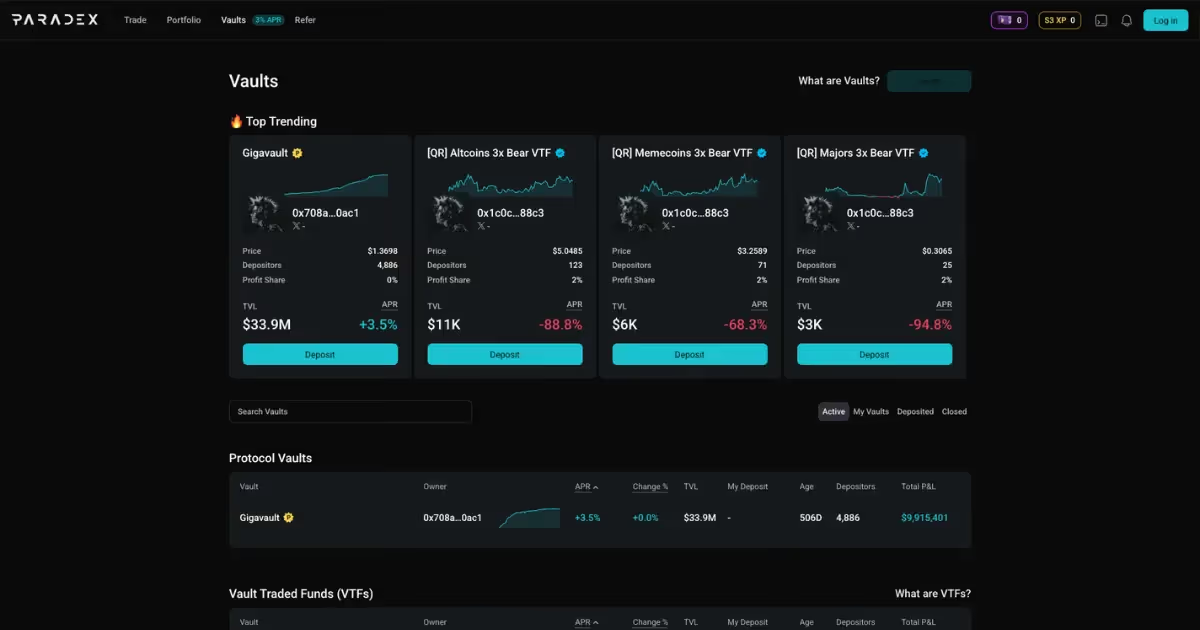
Paradex is a perpetual futures exchange built on its own Starknet-based appchain, offering zero trading fees for retail users and ZK-encrypted position privacy. With over $250 billion in cumulative volume and roughly $550 million in open interest as of early 2026, it's one of the fastest-growing perps venues outside of Hyperliquid.
The zero-fee model isn't a temporary promotion — it's structural. Professional market makers post hidden quotes visible only through the UI, competing for retail flow and paying Paradex a micro-fee for access. Retail traders pay nothing beyond spreads and funding rates on over 100 perpetual markets.
The privacy layer is the real differentiator: positions, entries, exits, and liquidation levels are all encrypted via ZK proofs, which means no one can front-run your stops or copy your trades without consent.
I wanted to test whether the zero-fee model actually delivered better execution than Hyperliquid on a mid-cap altcoin perp.
The Friction: In January 2026, Paradex had a serious incident — a maintenance error caused prices to briefly hit zero, triggering mass liquidations across thousands of positions. The team rolled back the chain state to a pre-incident block. User funds were safe, but the rollback itself was a stark reminder that appchains carry operational risk as a first-order variable. The explorer went offline during the incident, which made it impossible to verify state in real-time.
The Fix: If you're trading here, keep position sizes modest until the post-incident improvements are battle-tested under real volatility. The $DIME token TGE is expected in late Q1 2026, with 25% of supply airdropped to XP holders — Season 3 is live and rewards activity across spot, RWA perps, and options.
What to watch: Whether the team's operational reliability improves after the January rollback, and whether the DIME launch brings sustainable liquidity or just airdrop farmers.
2. Variational: P2P Derivatives With Zero-Fee Retail Trading
- Category: Perp DEX
- Chain: Arbitrum
- Trading volume: $70.6 billion
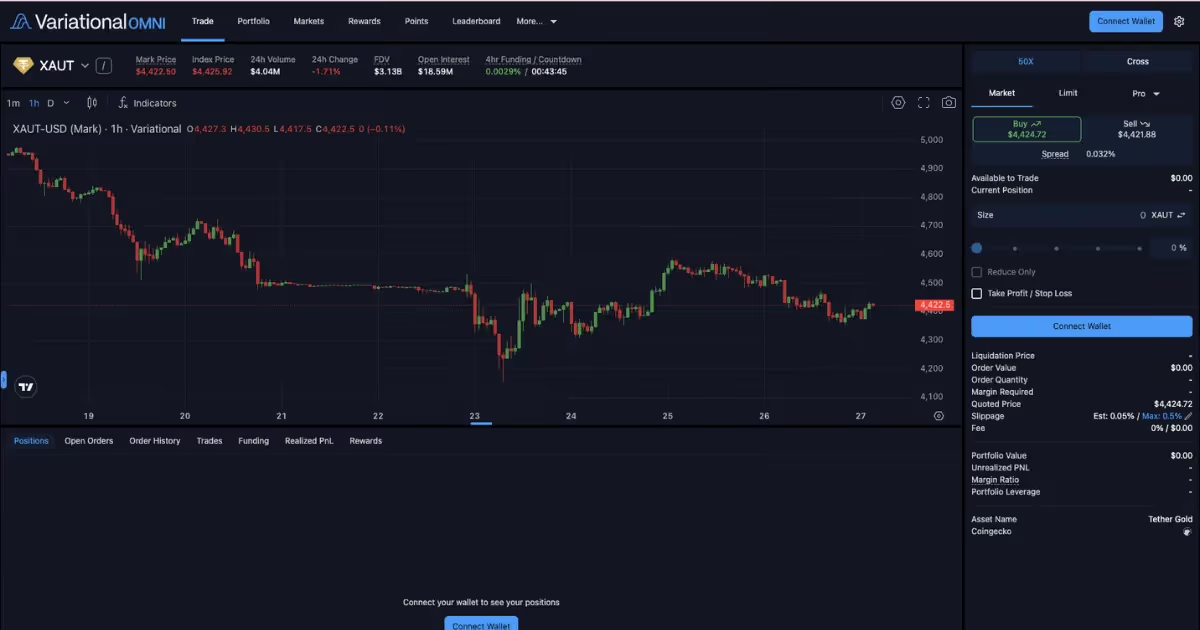
Variational is a peer-to-peer derivatives protocol on Arbitrum that uses a Request-for-Quote (RFQ) model instead of a traditional order book. Its flagship app, Omni, offers zero-fee perps trading across hundreds of markets, with a built-in loss refund mechanism that gives traders up to a 5% chance of instant refund on losing trades.
The key difference from order book perps is how liquidity works. The Omni Liquidity Provider (OLP) aggregates quotes from CEXs, DEXs, and OTC sources, acting as the sole counterparty. This "closed-loop" system eliminates slippage from thin books and removes the front-running problem entirely — there's no mempool for MEV bots to exploit. According to DefiLlama, Variational is processing over $1 billion in daily volume with $125+ million in TVL.
The institutional play is equally interesting. Variational Pro targets the $600 trillion OTC derivatives market by letting institutions create fully customizable derivatives contracts on-chain — think custom margin rules, escrow collateral, and non-linear payoffs, all settled via segregated smart contract pools. The team raised $11.8 million from Bain Capital Crypto, Coinbase Ventures, and Dragonfly.
What makes this worth watching: 50% of the $VAR token supply is allocated to community distribution — one of the highest ratios in DeFi history. The Omni points program ends no later than Q3 2026, so the farming window is closing.
3. USD.ai: The GPU-Backed Synthetic Dollar Financing the AI Economy
- Category: Stablecoin / RWA lending
- Chain: Arbitrum
- TVL: $330 million
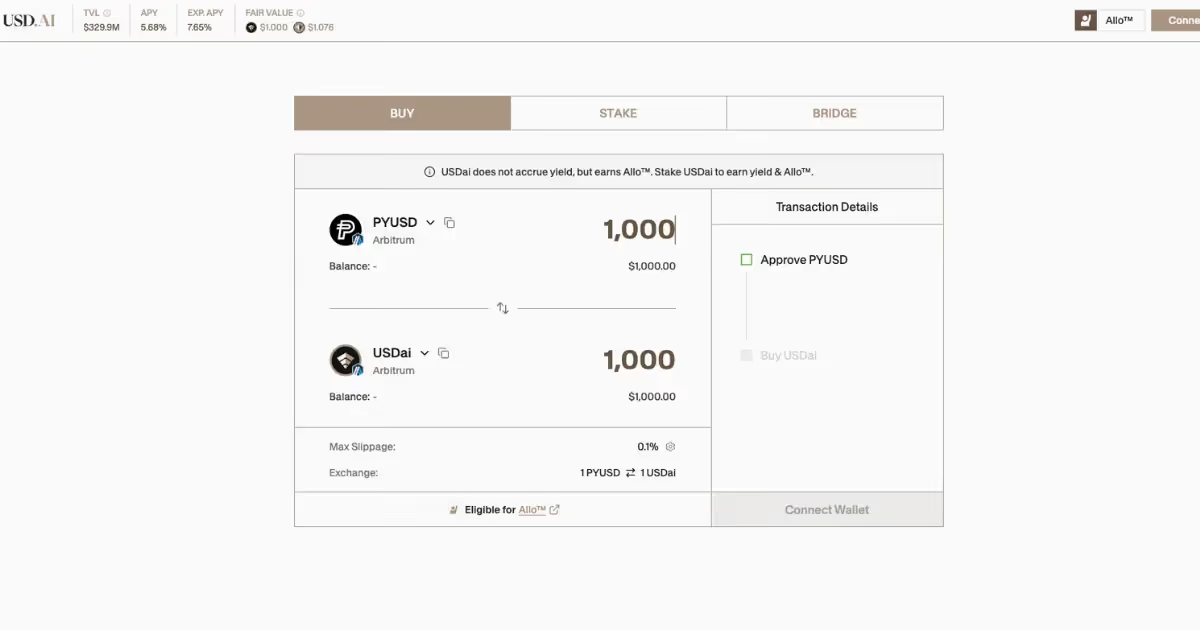
USD.ai backs its synthetic dollar with physical GPU hardware instead of fiat or crypto. You deposit stablecoins, mint USDai, stake for sUSDai, and earn yield from loans to AI companies using their GPUs as collateral. It's basically a mortgage market for the AI hardware boom.
I farmed the Allo Game through late 2025. Deposit USDC, mint USDai, stake for sUSDai and earn around 5.7% APY plus Allo points toward the CHIP airdrop. Simple enough. But once the deposit cap filled, you could only buy USDai on Arbitrum DEXs at a 3% premium, demand clearly outpacing supply.
But staking is not enough for DeFi degens. Users were looping USDai on Euler at 9x leverage, stacking 303% APY while earning 5x Allo points. Some took the low-risk route, for example, $10 of YT-sUSDai across 10 wallets as a spread bet on the airdrop. Pendle Intern showed how YT-USDai gave roughly 45x points exposure versus just holding.
The biggest catalyst: PayPal integrated PYUSD with USD.ai in December 2025, creating a stablecoin rail for AI companies to fund GPU purchases. Up to $1 billion in PYUSD deposits earn 4.5% APY through a one-year incentive program. The CHIP token completed its ICO on CoinList in March 2026, raising $36.8 million at $300 million FDV. For now, you can expect 7.66% APY on top of staked USDai, while being eligible for the Allo Season 2 airdrop.
The friction: sUSDai redemptions batch every 30 days. If you need out fast, you're swapping on a DEX and eating slippage. GPU collateral depreciates quickly and hasn't been stress-tested in a real default cycle.
What to watch: Whether PayPal deposits stick beyond the incentive period, and whether GPU-backed lending holds up under credit stress. Season 2 Allo Game is live if you're parking stables anyway.
4. Solstice: Institutional-Grade Yield on Solana Without the Gatekeepers
- Category: Yield / Stablecoin
- Chain: Solana
- TVL: $359 million
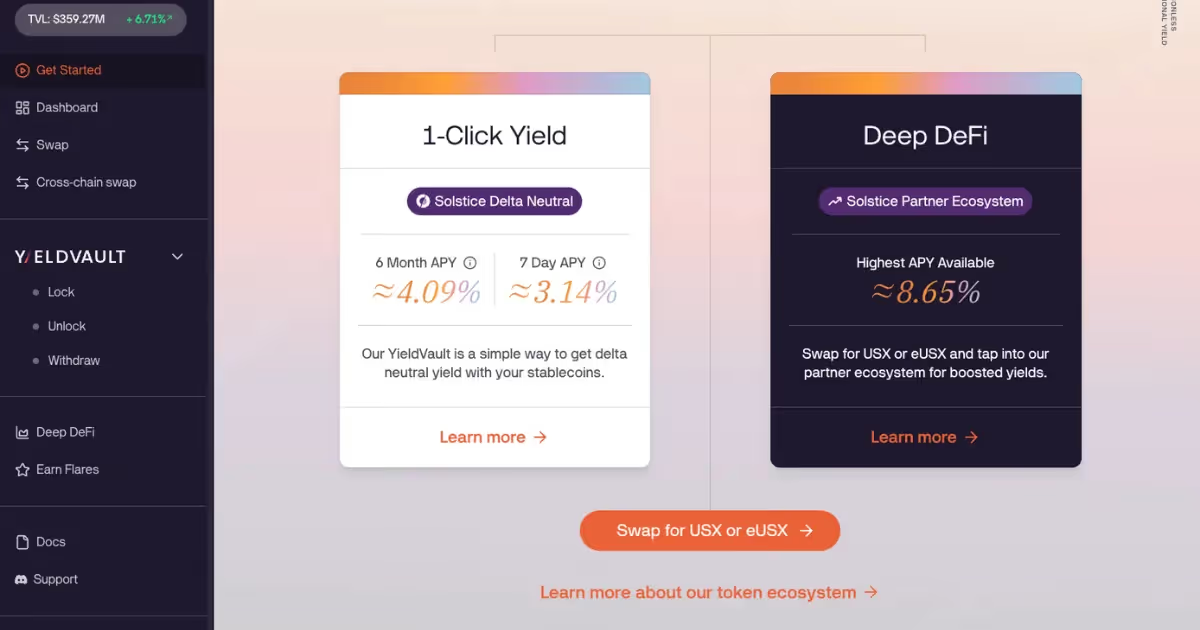
Next on our list is Solstice, Solana's first yield-native stablecoin protocol. Deposit USDC or USDT, mint USX, lock it in the YieldVault, and receive eUSX — a yield-bearing token powered by delta-neutral strategies (funding rate arb, hedged staking, T-bills). The YieldVault delivered 21.5% returns in 2024 with a 3-year Sharpe ratio of 7.05, and no month-over-month losses since inception in January 2023.
I've been parking stables in the YieldVault since late 2025. The UX is clean, easy to swap into USX on Jupiter, lock for eUSX, done. What impressed me is that eUSX stays liquid: you can deploy it across Solana DeFi (Raydium, Kamino, Orca) while it's still earning. That composability is what Ethena's sUSDe offers on Ethereum, but is native to Solana where fees are negligible.
Solstice manages approximately $300 million in TVL across 24,000+ holders, with the underlying strategy having managed $200 million+ in institutional capital before going permissionless in September 2025. Solstice is backed by some renowned VCs like Deus X Capital ($1B+ AUM), Galaxy Digital, Bitcoin Suisse, and Susquehanna Crypto, all of which provided launch liquidity. DeFi Development Corp. (Nasdaq: DFDV) became the first Nasdaq-listed company to deploy treasury capital into Solstice's YieldVault, which is a meaningful institutional signal.
The Flares program (points toward the SLX governance token airdrop) is live. Earn by holding eUSX, providing LP, or completing partner tasks. No VC token allocation, community-first distribution, which is a new airdrop playbook in DeFi.
The friction: Yields depend on funding rates staying positive. During a market-wide drawdown, USX and eUSX held their peg while the YieldVault continued generating around 8% APY. It's promising, but a prolonged bear market with negative funding could compress returns. Direct minting requires KYC and a $500K minimum; retail users swap on DEXs.
What to watch: Whether Solstice can keep Solana stablecoin TVL from bridging out to Ethereum for yield, and how the SLX TGE performs. If you're already on Solana and tired of farming memecoins, this is the boring-but-real yield play.
5. Boros: Pendle’s Expansion Into Funding Rate Derivatives
- Category: Rate trading
- Chain: Ethereum, Arbitrum, Solana, HyperEVM
- TVL: $7.5 billion
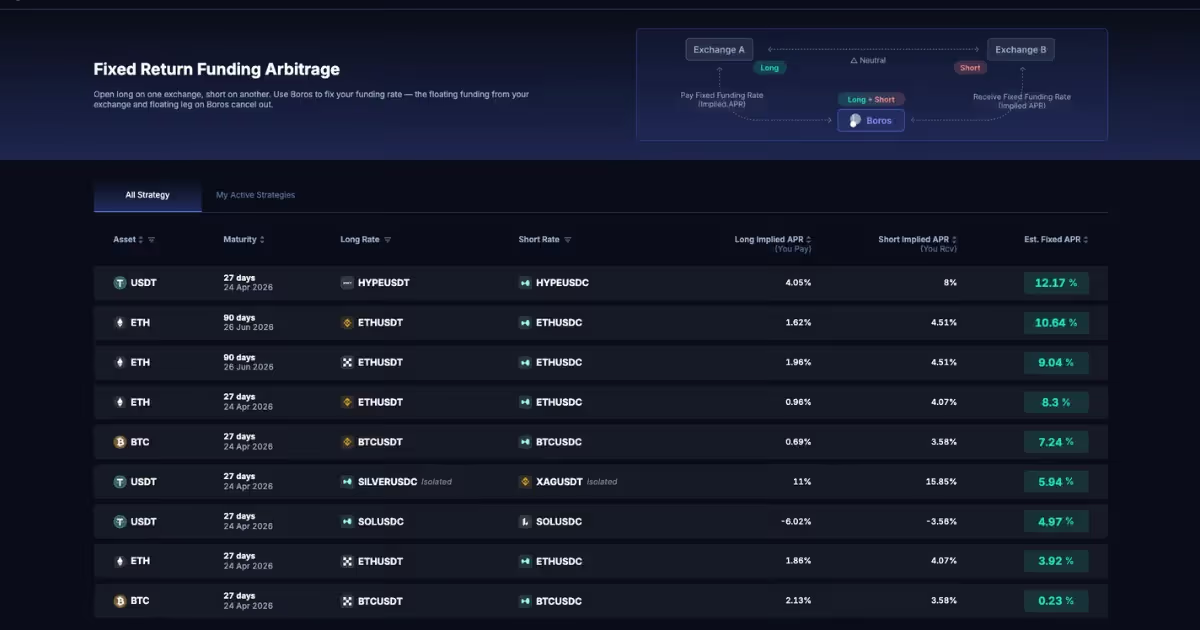
Boros is Pendle's new platform on Arbitrum that tokenizes perpetual futures funding rates into tradeable instruments called Yield Units (YUs). It's the first liquid, composable market for funding rate exposure — and it fills a massive gap in DeFi infrastructure.
Think of it this way: perpetual futures carry over $170 billion in open interest across major venues, and every position pays or receives funding. But until Boros, there was no way to hedge or speculate on those funding rates directly. Now you can go long YU if you think rates are going up, or short if you expect them to drop. Each YU represents the realized funding yield on one unit of notional (e.g., 1 ETH) until maturity.
The immediate use case is for Ethena and similar delta-neutral strategies. Ethena's entire model depends on positive funding rates — and when rates go negative, yields compress. Boros lets these protocols lock in a fixed rate and eliminate that variable risk. For individual traders, cross-exchange funding rate arbitrage through Boros has been delivering 5.98%–11.4% fixed APR according to the team's own analysis.
Boros achieved roughly $6.9 billion in open interest shortly after launch. Importantly, it doesn't introduce a new token — 80% of fees flow to sPENDLE holders, keeping the existing flywheel intact.
What to watch: The 2026 roadmap includes making cross-platform funding rate arbitrage "super easy" and expanding beyond crypto into bonds and equity yield products.
6. Ostium: Permissionless Perp DEX for 24/7 RWA Trading
- Category: Perp DEX
- Chain: Arbitrum
- TVL: $81.75 million
- Trading volume: $41 billion
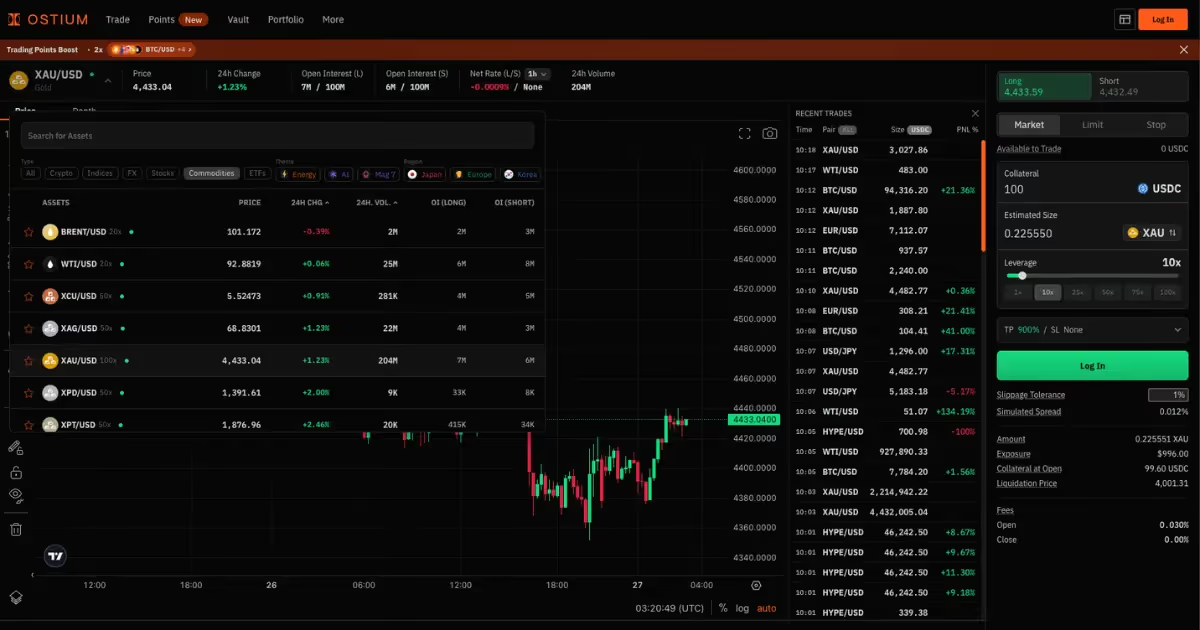
Ostium is a self-custodial leveraged trading platform on Arbitrum that lets you trade perpetual swaps on stocks, commodities, forex, and indices — all from a crypto wallet using USDC as collateral. Think gold, S&P 500, NVDA, EUR/USD, up to 200x leverage, fully on-chain.
What separates Ostium from the equity perps hype is that it's been live and processing volume for over a year. Per Bankless reporting, the platform has processed over $25 billion in cumulative trade volume, with $5 billion in metals trading alone. During recent gold rallies, Ostium captured more than 50% of total on-chain gold open interest. Over 95% of its open interest is tied to traditional markets rather than crypto assets.
The protocol uses a pool-based model (similar to GMX) where traders trade against the Ostium Liquidity Pool (OLP), with oracle-sourced pricing from Chainlink for crypto and Stork for RWA feeds. The OLP vault has been offering roughly 28% APY on USDC deposits.
Ostium raised a $20 million Series A led by General Catalyst and Jump Crypto in December 2025. The team is backed by names from Bridgewater, Two Sigma, and Brevan Howard.
Important friction to know: RWA markets have specific trading hours. If you place an order for gold or forex outside market hours, it queues until the market reopens. This caught me off guard the first time — I set a limit order on gold at 11pm EST and it just sat there until London open.
7. trade.xyz: 24/7 Stock and Commodity Perps on Hyperliquid
- Category: Perp DEX
- Chain: HyperEVM
- Trading volume: $58 billion
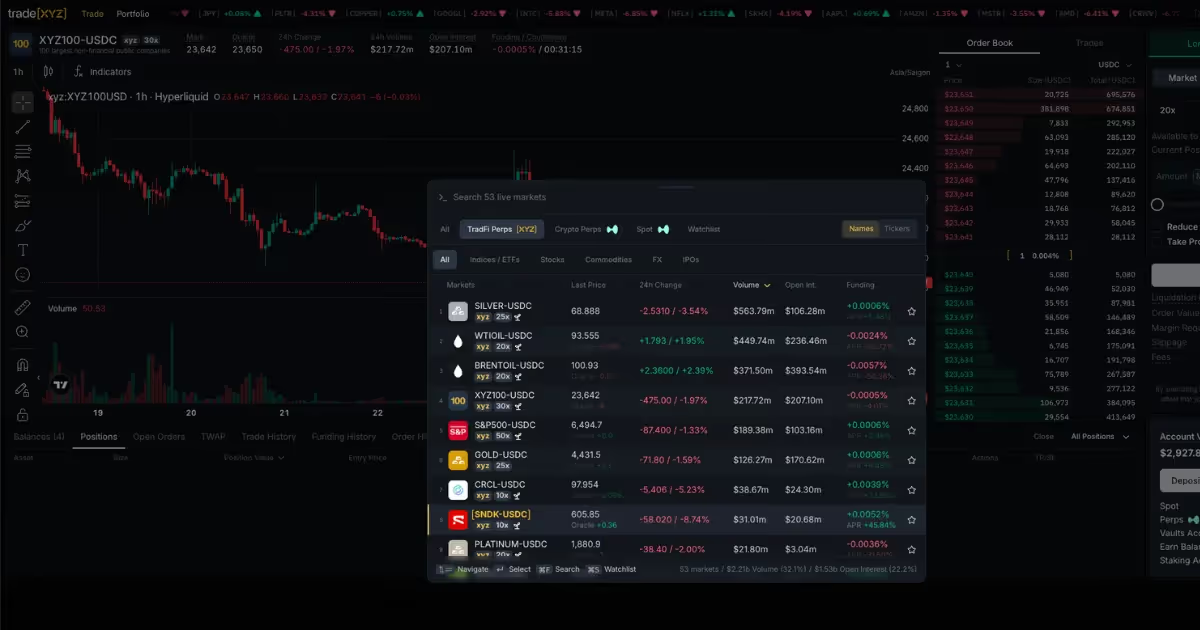
trade.xyz is one of the leading HIP-3 market providers on Hyperliquid, deploying equity and commodity perpetuals that trade around the clock. Their XYZ100 (Nasdaq 100 tracker) alone has been doing $75 million in daily volume — dwarfing comparable markets on pool-based venues.
On-chain RWA perps volume surged 162% from $11.8 billion in December 2025 to $31 billion in January 2026, and HIP-3-based platforms on Hyperliquid are commanding the largest share. trade.xyz has been at the center of this growth, offering individual stock perps (TSLA, NVDA, AAPL) alongside commodity and index markets.
The advantage over pool-based models like Ostium is order-book-driven price discovery. When trade.xyz's TSLA market is doing $12 million in 24-hour volume compared to Ostium's $1.4 million, the depth difference is real and translates directly into tighter spreads for traders.
What to watch: Whether equity perps maintain volume when the novelty fades, and how oracle latency is managed during volatile market opens when TradFi and crypto pricing can briefly diverge.
8. Morpho: The Modular Lending Layer for Institutional DeFi
- Category: Lending and borrowing
- Chain: Ethereum, Base, Hyperliquid, Arbitrum, Katana, Plume, Monad, OP Mainnet and more.
- TVL: $8.8 billion
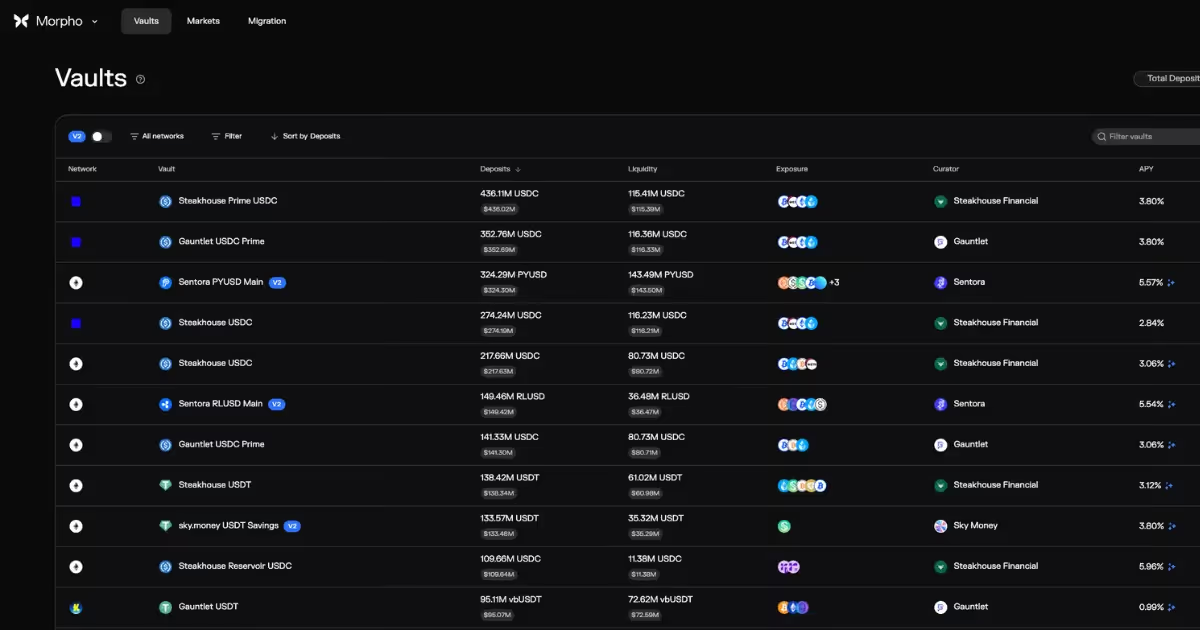
Morpho is the second-largest DeFi lending protocol by TVL at roughly $5.8 billion as of March 2026, and it's structurally different from Aave or Compound. The core innovation is separating the lending primitive (Morpho Blue — an immutable, 650-line smart contract) from the risk management layer (curated vaults), creating a modular stack where anyone can create markets with custom parameters.
Apollo Global Management, with $940 billion in AUM, signed a deal to acquire up to 90 million MORPHO tokens (9% of supply) over 48 months. That's the largest traditional finance commitment to a single DeFi protocol's governance token to date. The Ethereum Foundation has also deployed 3,400 ETH into Morpho Vaults, signaling confidence in the protocol as institutional-grade infrastructure.
USDC supply rates on Morpho typically run 0.5%–2% higher than equivalent rates on Aave or Compound, because the peer-to-peer matching and leaner architecture reduce the interest rate spread. The protocol scaled from 67,000 to over 1.4 million users in 2025, with deposits growing from $5 billion to $13 billion.
Morpho V2 — the core 2026 priority — moves to market-driven rate pricing instead of protocol-defined formulas. This mirrors how traditional credit markets work, which is exactly what institutions like Apollo need to participate confidently.
What to watch: Whether V2's externalized rate pricing attracts the wave of institutional capital the Apollo deal signals, and whether Base continues to grow as a deployment target (USDC deposits on Base already surpassed Ethereum mainnet at $1.4 billion+).
9. RAILGUN: Private DeFi That Actually Works
- Category: DeFi tool
- Chain: Ethereum, Arbitrum, Polygon, and BNB Chain
- TVL: $123.93 million
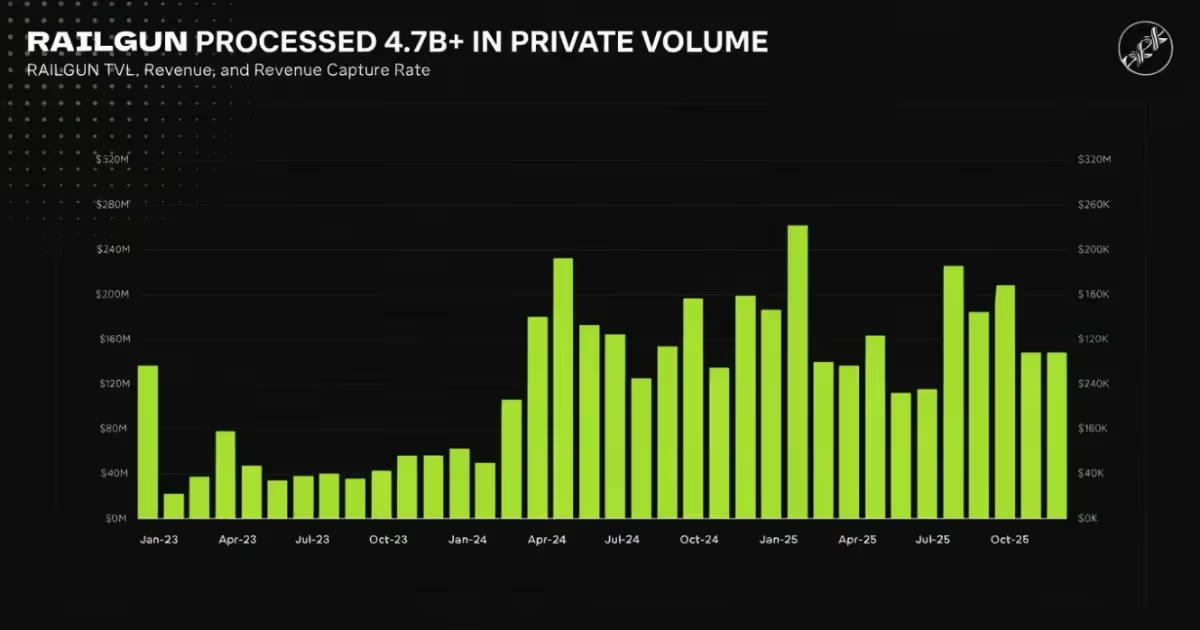
RAILGUN is an on-chain privacy system that lets you interact with DeFi protocols — Uniswap, Aave, lending, farming — while shielding your balances, transaction history, and strategy from public view. Unlike mixers, RAILGUN operates directly within the DeFi ecosystem on Ethereum, Arbitrum, Polygon, and BNB Chain using zero-knowledge proofs.
The protocol hit a record daily average of 326 shields in early 2026, with cumulative volume reaching $4.5 billion — nearly doubling year-over-year. Vitalik Buterin has publicly endorsed it as one of the strongest privacy approaches in the Ethereum ecosystem.
The Railway Wallet is the main interface. You deposit tokens into a shielded pool, and from there, every swap, transfer, or DeFi interaction generates a ZK proof that validates the transaction without revealing who you are, what your balance is, or where funds came from. The Private Proofs of Innocence feature (based on the Privacy Pools concept) lets you prove your funds aren't from sanctioned sources without exposing your identity.
The practical use case: Large traders and funds can rebalance portfolios without tipping off copy-traders or MEV bots. When you're rotating between positions, the last thing you want is someone front-running your strategy based on public wallet activity.
The friction: Shielding requires a one-hour standby phase before funds become usable. If you need instant execution on a time-sensitive trade, that delay matters.
Even Vitalik has highlighted Railgun’s privacy pools, just one of several times he’s pointed to it as a practical privacy tool for everyday crypto use.
This is a solid demonstration of Railgun's privacy pools mechanism ( https://papers.ssrn.com/sol3/papers.cfm?abstract_id=4563364 ) working in practice, allowing Railgun to avoid serving proceeds of crime without using any snooping / backdoors. Source: Vitalik Buterin
10. Payy: The Privacy-First Stablecoin Chain and Crypto Card
- Category: Private crypto card and Ethereum L2
- Chain: Ethereum
- TVL: $784 million
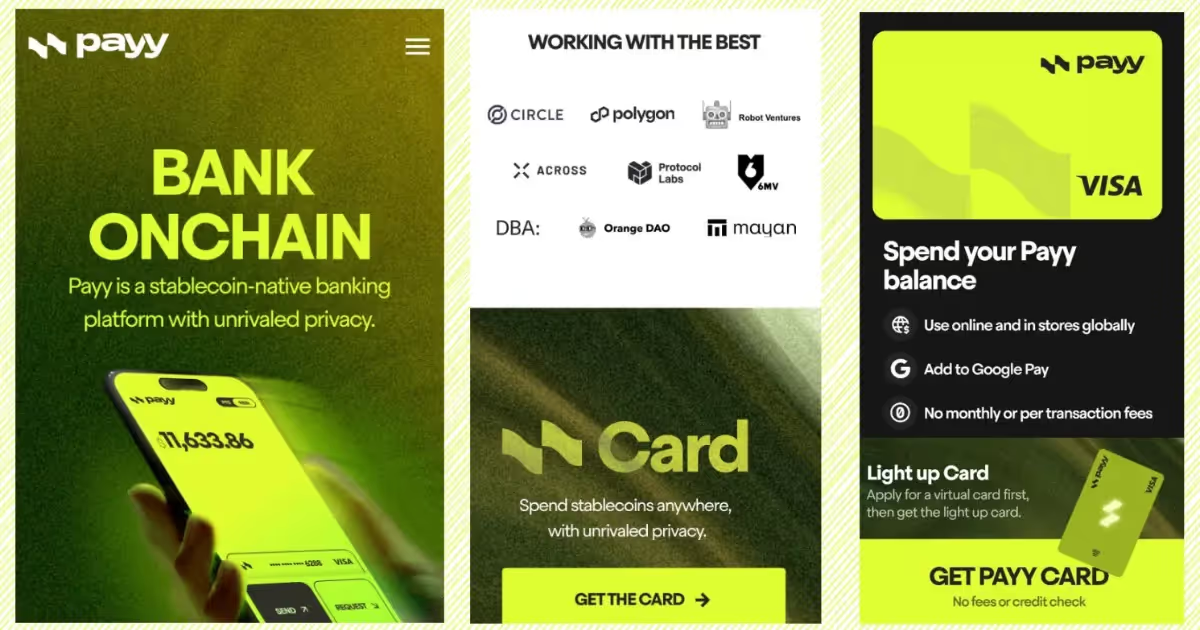
Payy launched its Ethereum L2 network on February 5, 2026, building on the privacy wallet and crypto banking card it rolled out in mid-2025 (now at roughly 100,000 users). The L2 hosts private ERC-20 pools that automatically route transactions, keeping counterparties confidential without requiring smart contract changes.
The pitch is aimed squarely at institutions and fintechs. As CEO Sid Gandhi has noted, banks and enterprises keep saying the same thing: they can't move real capital flows on-chain if their financial data is exposed to the public. Payy addresses this by making all ERC-20 transfers private by default — you add the network as a custom chain in MetaMask, and transactions are automatically shielded.
The focus is primarily on private stablecoin transfers, which is where institutional demand is strongest. Launch partners include undisclosed stablecoin issuers.
The key takeaway: Payy is very early. The network is live, but the ecosystem is thin. The real question is whether stablecoin issuers and fintechs actually build on it, or whether the privacy-by-default value proposition gets commoditized by larger players like Aztec. Worth monitoring, but not worth heavy capital commitment yet.
11. ether.fi: The DeFi Neobank With 70,000 Active Cards
- Category: Crypto card and Neobank
- Chain: OP Mainnet, Ethereum
- TVL: $5.2 billion
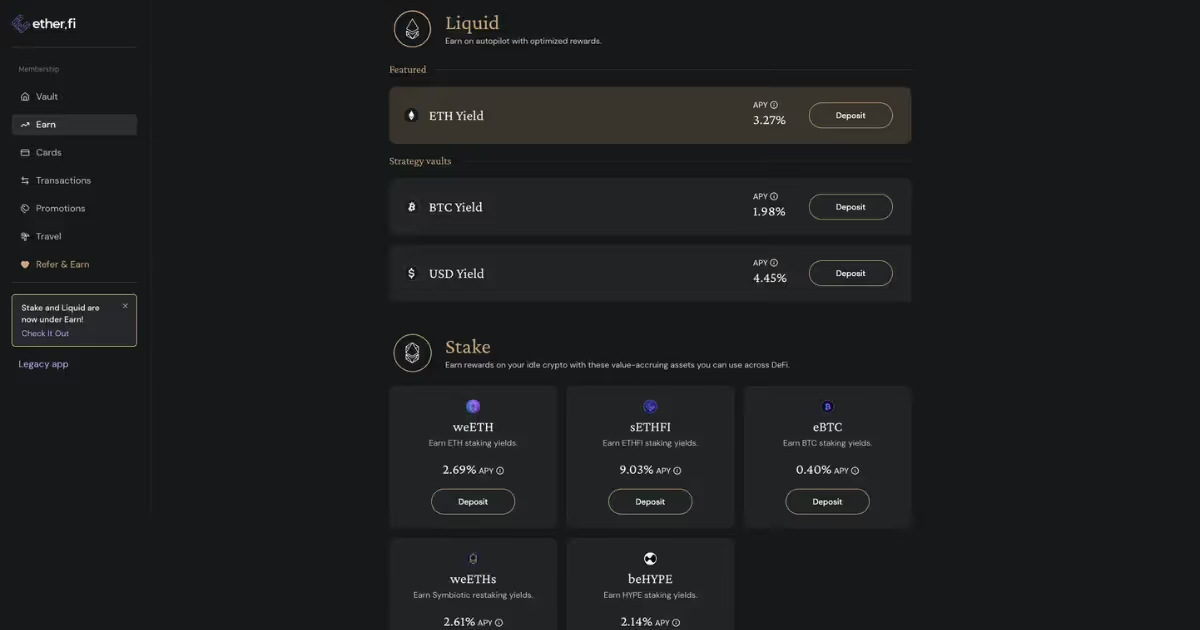
ether.fi started as a liquid restaking protocol (still holding a near-record 2.7 million ETH in TVL) and pivoted into a full-blown DeFi neobank. The Cash app processes around 28,000 payment transactions daily with average daily user spending exceeding $2 million. Total card spending has exceeded $265 million since launch.
The non-custodial Visa credit card lets you spend against your crypto collateral without selling — your assets sit in a Gnosis Safe under your control, not in the platform's custody. Up to 3% cashback, Apple Pay and Google Pay support, physical and virtual cards, and acceptance at 100+ million locations worldwide.
The team is migrating 300,000 accounts and 70,000 active crypto cards to OP Mainnet for better scalability. Key metrics have been roughly doubling every two months since launch in September 2024. The neobank layer includes fiat on/off ramps, bill payments, payroll services, and tiered membership with travel perks.
The friction: The card works seamlessly for everyday spending, but the initial KYC and state-by-state availability in the U.S. means not everyone can access it yet. The 0% APR promotional borrowing rate is expected to shift to Aave-linked market rates in 2026.
What to watch: Whether ether.fi can maintain its doubling growth curve as it scales past 100,000 active cards, and whether the staking-plus-spending flywheel creates genuine retention beyond the initial points incentives.
You can now order physical EtherFi cards (Core, Luxe and Pinnacle) from the website. VIP and corporate cards will be enabled soon.
Wrapping Up
The DeFi landscape in 2026 enters a new phase, leaner, smarter, and more focused on long-term value, privacy, and institutional-ready. The projects we’ve covered aren’t chasing short-term trends; they’re building real infrastructure, redefining token utility, and pushing the limits of capital efficiency.
As liquidity fragments and users get savvier, the protocols that survive will be those that solve real problems. These 11 standouts are doing just that, each in their own lane, but all pushing DeFi forward.
Disclaimer: This article serves informational purposes only and does not constitute financial advice. Conduct your own research before making investment decisions.

.png)

%201%201.png)