I Tested 11 Perp DEXs So You Don't Have To
10 minutes


Since the lucrative Hyperliquid's HYPE airdrop, I've been rotating between perp DEXs for the better part of a year now — farming points while hedging on 2-3 platforms simultaneously, depositing in perpetual vaults for passive stablecoin yields, and watching the entire sector reshape itself in the V shape.
DEX perps surged 346% to $6.7 trillion in 2025 volume. By early 2026, peak daily volume hit $7.8 billion. The broader market has cooled since — March 2026 dipped to $699 billion from October's $1.36 trillion peak — but the story underneath is more interesting than the headline. RWA perps are exploding, privacy is becoming a real product differentiator, and the hedging infrastructure across platforms is finally mature enough for serious capital.
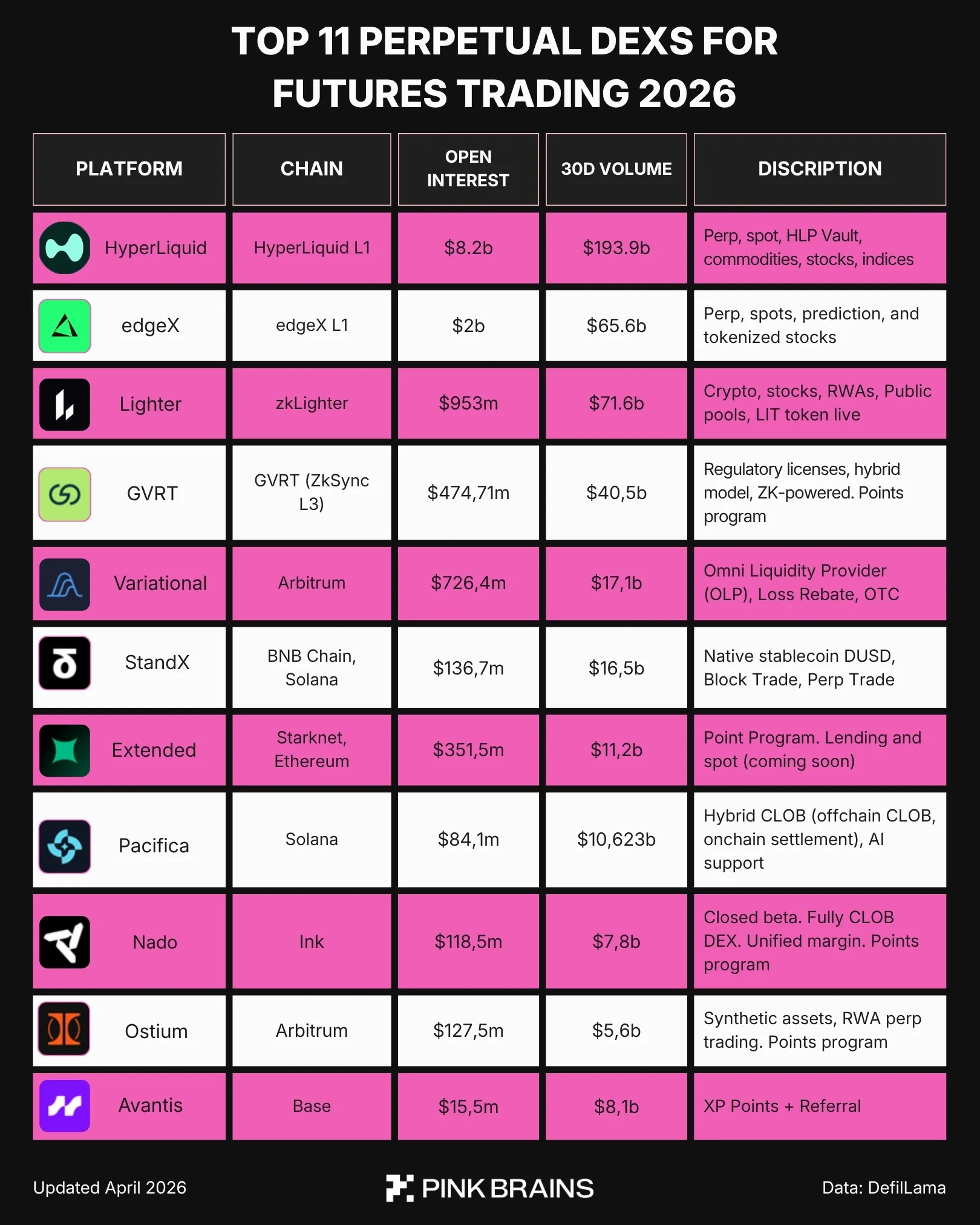
Here are the 11 perp DEXs that are top performing, ranked by trading volume, with notes on what each one actually feels like to trade.
1. Hyperliquid
Being one of the most innovative DeFi protocols in 2026, Hyperliquid dominates the perp trading sector with $4.24 trillion in cumulative volume, ~$8 billion open interest, and a record 231,000 active traders as of March 2026. It processed $178 billion that month alone — more than every other competitor combined. This is where I keep one leg of my cross-platform hedges because nothing else matches the liquidity depth on BTC and ETH.
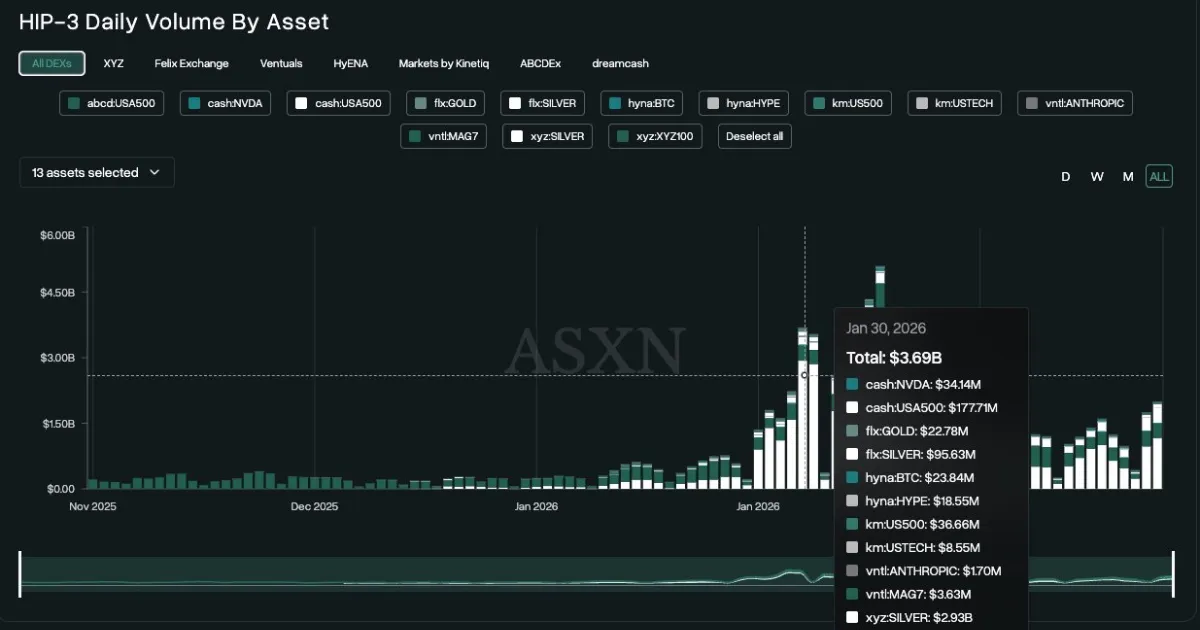
But the real 2026 story is HIP-3. Hyperliquid's permissionless market deployment turned it into something that looks less like a crypto DEX and more like a 24/7 alternative to the CME. Anyone staking 500K $HYPE can launch perpetual contracts for any asset with a reliable price feed. The results have been staggering: HIP-3 open interest hit $2.3 billion in early April. Six of Hyperliquid's top 10 most traded assets are now RWA-linked. TradeXYZ, the dominant HIP-3 builder, commands 91% market share with $69 billion in total volume.
The S&P 500 contract — the first officially licensed S&P DJI perpetual derivative — cleared $100 million daily volume within days of launch. Oil perps flipped ETH trading during peak hours. When US-Israeli airstrikes hit Iran and commodity markets were closed for the weekend, WTI perpetuals on Hyperliquid saw $1.4 billion in weekend volume. Crude liquidations hit $56 million in 24 hours. Expressing a macro view on oil at 2am Saturday while TradFi sleeps is an edge that simply didn't exist a year ago.
On the LP side, HLP yields around 10%. Conservative compared to newer vaults, but battle-tested with no lockup. I keep a baseline allocation here while running more active strategies elsewhere. The 97% fee-to-buyback loop (protocol fees funding automated daily HYPE purchases) is the cleanest value accrual happening in DeFi at the moment.
BitMEX research confirms Hyperliquid captured 29.7% of the TradFi perpetual swaps market in Q1 2026, posting 953% quarterly volume growth. Ripple Prime recently expanded its integration to HIP-3, offering institutional clients access to tokenized commodity perps. Bitwise filed for a spot HYPE ETF (ticker: BHYP). And HIP-4 — permissionless prediction markets with leveraged outcome contracts — is live on testnet now, with mainnet expected by June. If it ships, Hyperliquid becomes the only platform offering spot, perps, and prediction markets on a single execution layer. No CEX or DEX currently matches that.
2. edgeX
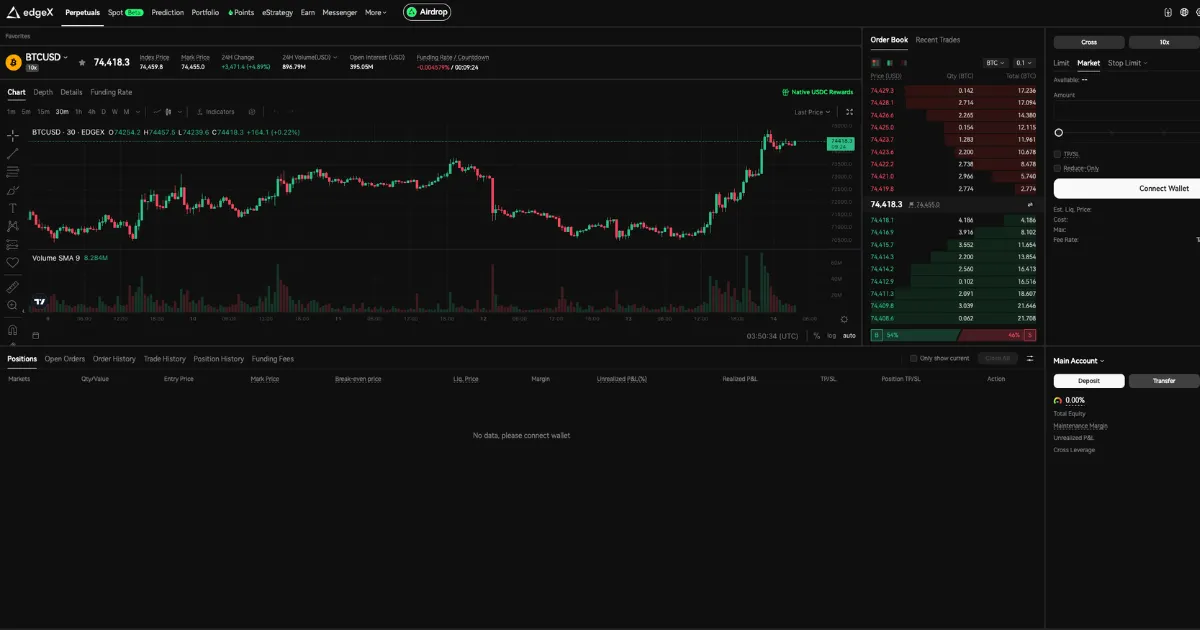
While Lighter was dealing with its post-airdrop hangover, edgeX quietly climbed the rankings. It sits at top 2 globally with $515 billion+ cumulative volume, processing around $70 billion monthly. StarkWare's ZK-rollup underneath, 200K orders/second, sub-10ms matching. Incubated by Amber Group (~$5B AUM), the institutional plumbing shows: sub-accounts, split positions, hedge mode, up to 100x on BTC.
I use edgeX as one leg of my cross-platform funding rate arb. The hedge mode lets you hold opposing positions in isolated sub-accounts without netting — exactly what you need when farming funding differentials across venues. The mobile app is genuinely the best in the perp DEX space — I've executed full position setups from my phone during volatile evenings without friction. The eLP vault peaked at 57% annualized, though that was one month's data.
The V2 upgrade (EDGE Stack) is rolling out now, turning edgeX into a market-focused L2 with spot, Polymarket integration, and tokenized stocks. EDGE token is live with with 20–35% community allocation. I'm staying active through launch.
3. Lighter
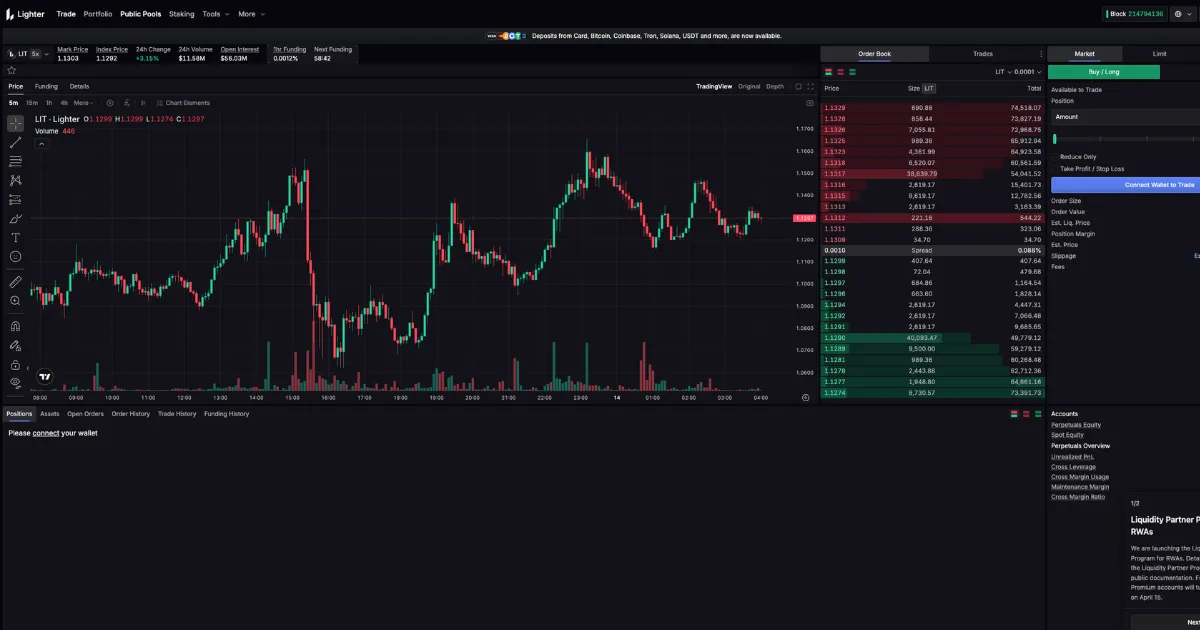
If Hyperliquid is the undisputed king, Lighter was the closest anyone came to challenging it. Built on a custom zero-knowledge rollup with sub-5ms latency and zero trading fees for retail, Lighter briefly overtook Hyperliquid in Q4 2025 monthly volume, hitting $252 billion in perp swaps and $1.3 trillion in annual volume. The execution felt instant — I had zero complaints about the matching engine during the months I was active. The LLP vault peaked at around 200% APR, though that fluctuated hard with market conditions.
Then came the TGE in late December 2025. The $LIT airdrop distributed 25% of supply to point holders — the token opened above $3.30, pushing total airdrop value to roughly $675 million. And then the music stopped. Within 24 hours, $250 million was pulled from the platform. Volume dropped 70% almost overnight. Hyperliquid immediately reclaimed the #1 spot by both volume and open interest.
That post-airdrop collapse taught me more about perp DEX liquidity than any whitepaper. Incentive-driven volume is real volume — until the incentive ends. Lighter's OI-to-volume ratio was always weaker than Hyperliquid's, which suggested a large share of flow was farming-driven rather than organic. Still, the infrastructure is genuinely strong. Lighter raised $68 million from Founders Fund, Ribbit Capital, Haun Ventures, and Robinhood Ventures.
The 2026 roadmap includes RWA perps, RWA spot, portfolio margin, a mobile app, and a zkEVM sidecar. If the team can rebuild organic volume on top of that infrastructure, Lighter is far from dead. I'm watching TVL stabilization as the key signal — Justin Sun bought 13.25 million $LIT worth $33 million post-TGE, which tells you the smart money sees value at current levels even after the farming exodus.
4. GRVT
Speaking of institutional credibility, GRVT takes a completely different approach to the compliance question. It crossed $393 billion cumulative (double-sided) with TVL up 847% to $107 million and open interest at $484 million. Monthly volume hit $51.6 billion in January — each $50B milestone reached faster: 51 days, 43, then 30.
What separates GRVT is something no other perp DEX has: actual regulatory licenses - VASP in Lithuania, applications pending for MiCA, VARA, ADGM. The hybrid model — CEX-grade UX with ZK self-custody on zkSync Validium L3 — isn't just technical, it's a compliance strategy for institutional capital.
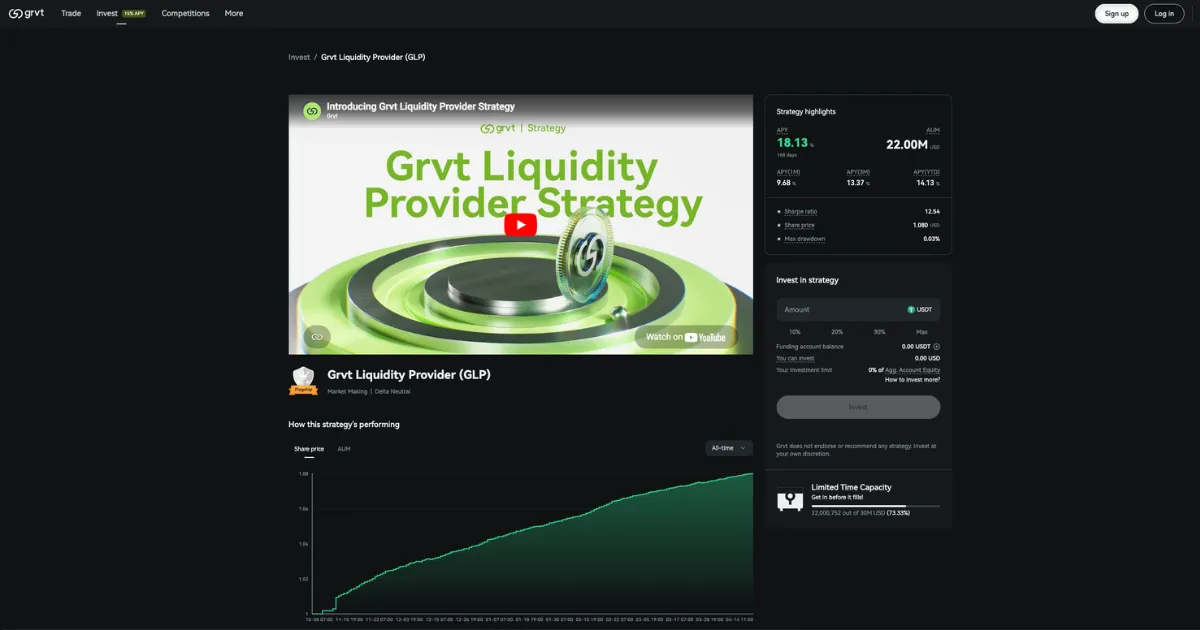
The GLP vault explicitly runs delta-neutral market-making, with a decent APY at 18% at the time of writing. However, the 2–7 day lockup is real friction though — capital mobility matters when the meta rotates fast. As it is a liquidity provider vault, the biggest risk happens under mass trading payout and high-volatile markets.
GRVT TGE expected after June 30, 2026, with 28% community allocation. I'm farming here because the compliance angle could make GRVT one of the few perp DEXs that institutional money actually touches post-TGE.
5. Variational
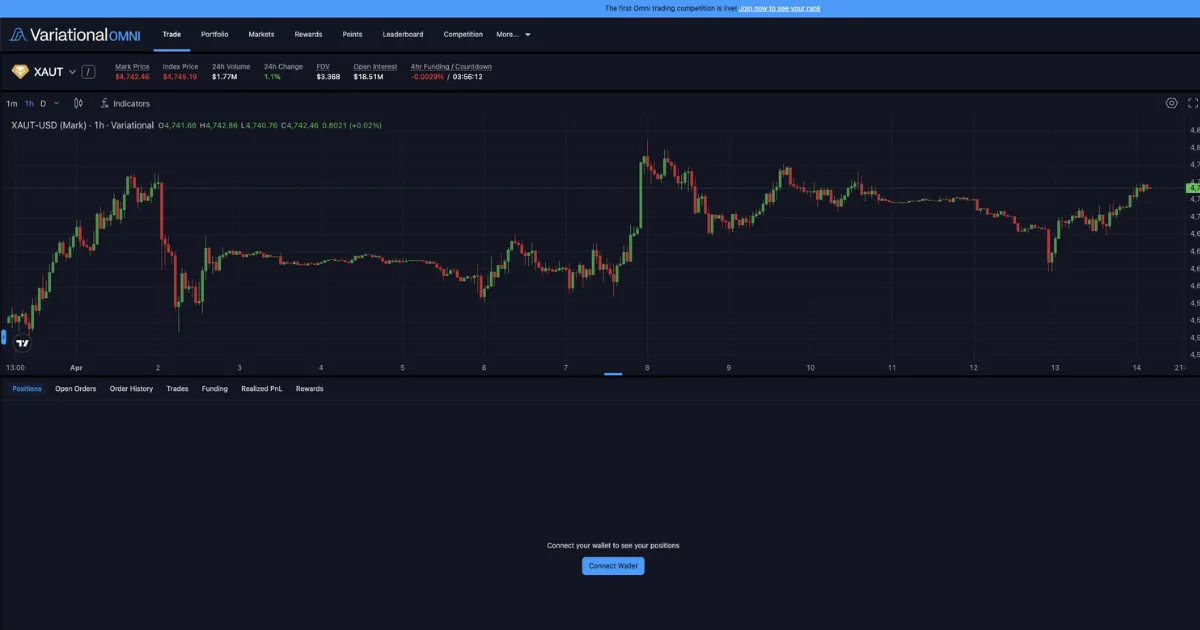
Now here's something architecturally different from everything else on this list. Variational hit $17 billion monthly volume using a Request-for-Quote model where the Omni Liquidity Provider (OLP) acts as the sole counterparty to every trade. You request a quote, OLP prices it with a tight spread baked in, and that spread is the protocol's revenue — not fees. Zero maker, zero taker, just 0.1 USDC for deposit/withdrawal.
The economics are clever. OLP hedges your position in real time on Binance, Hyperliquid, or wherever it gets the best rate. Institutional VIP rates mean hedging costs run 0–2 bps versus the 4–6 bps spread you pay — the gap is pure protocol revenue. During April-July 2025, OLP reportedly hit 300%+ annualized on a smaller treasury. Those numbers will compress as the pool scales, but the model itself is fundamentally sound.
What got me trading here is the Loss Rebate. Every losing trade enters a lottery for a full refund — up to 5% chance at higher tiers, funded by 10% of spread revenue. They've distributed $1.1M+ in refunds so far. It doesn't change my strategy, but knowing a losing trade might get refunded is a surprisingly effective reason to keep coming back. The other edge is market coverage: 515+ tradable tokens, far more than Hyperliquid (~200). The automated listing engine spins up new markets the moment pricing data exists. Founded by ex-Columbia quants who ran hedge fund Qu Capital, backed by Coinbase Ventures, Bain Capital Crypto, and Dragonfly. 50% of $VAR goes to community. Points launched December 2025 — still genuinely early.
6. StandX
Another interesting model comes from StandX, which runs on Solana and BNB Chain with a twist in perp trading: your margin earns yield while you trade. The platform's native stablecoin DUSD generates ~3.5% APY automatically — no staking, no lockup, just hold it as collateral. The yield comes from spot staking and futures funding fees through a delta-neutral model similar to Ethena's USDe. DUSD TVL crossed $154 million by late 2025, and monthly perp volume hit $16 billion by mid April 2026 with $70.9 million TVL on the exchange, making StandX a more traded perp DEX than OGs like dYdX or GMX.
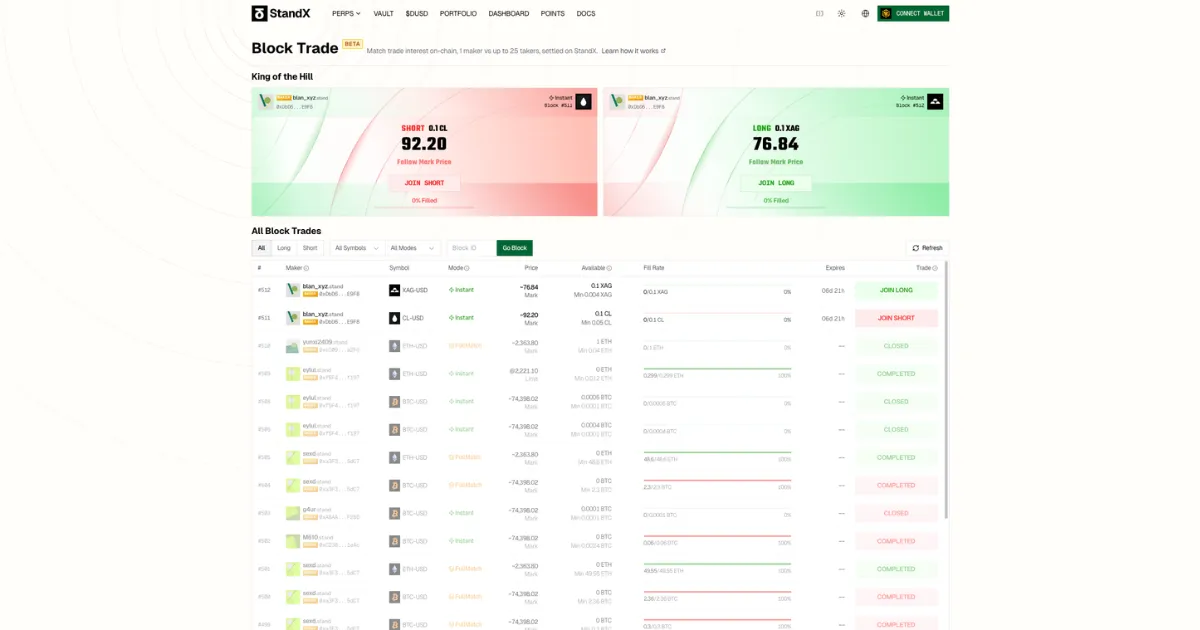
The newest addition that caught my eye is Block Trade (SIP-1) — peer-to-peer perpetual contract trades that are fully isolated from the orderbook. You set the size, price, and direction, and counterparties match directly against your order. The key detail: Block Trade doesn't touch the mark price, funding rates, or K-lines. It's completely off-book. That means a whale can move $5M in a single trade with zero market impact and zero slippage. A single block supports up to 25 counterparties, and there are two execution modes — Flexible (settle as matches arrive) or FullMatch (settle only after the entire block fills). Everything is onchain and traceable across BSC, Solana, and any supported chain. For anyone running size on a DEX and sick of sweeping thin orderbooks, this is the kind of feature that used to only exist on institutional OTC desks.
The point system is also worth understanding if you're farming here.
StandX is the first perp DEX to award Maker Points for limit orders that don't even execute — just placing an order on the book for more than 3 seconds earns you points, with a proximity multiplier that pays more the tighter you quote to mid-price. That means you can farm points with zero trading risk if you're careful with placement.
On top of that, the Maker Uptime Program distributes 5 million tokens monthly to professional traders who provide two-sided liquidity within 10 bps of the spread for at least 30 minutes per hour. For someone running funding rate arb across multiple platforms, having one leg's margin compound passively on top of the arb profit is a genuine capital efficiency edge — and the maker incentives mean your resting orders earn additional rewards even when they don't fill.
The team is self-funded, built by former Binance Futures and Goldman Sachs engineers, backed by a Solana Foundation grant. StandX integrates with Raydium and PancakeSwap for DUSD liquidity. The points system launched December 2025 and ties directly to future token rewards, though no TGE date is confirmed. TVL doubled to $52 million in just three days during the pre-deposit phase — real demand for the yield-bearing margin model.
7. Extended
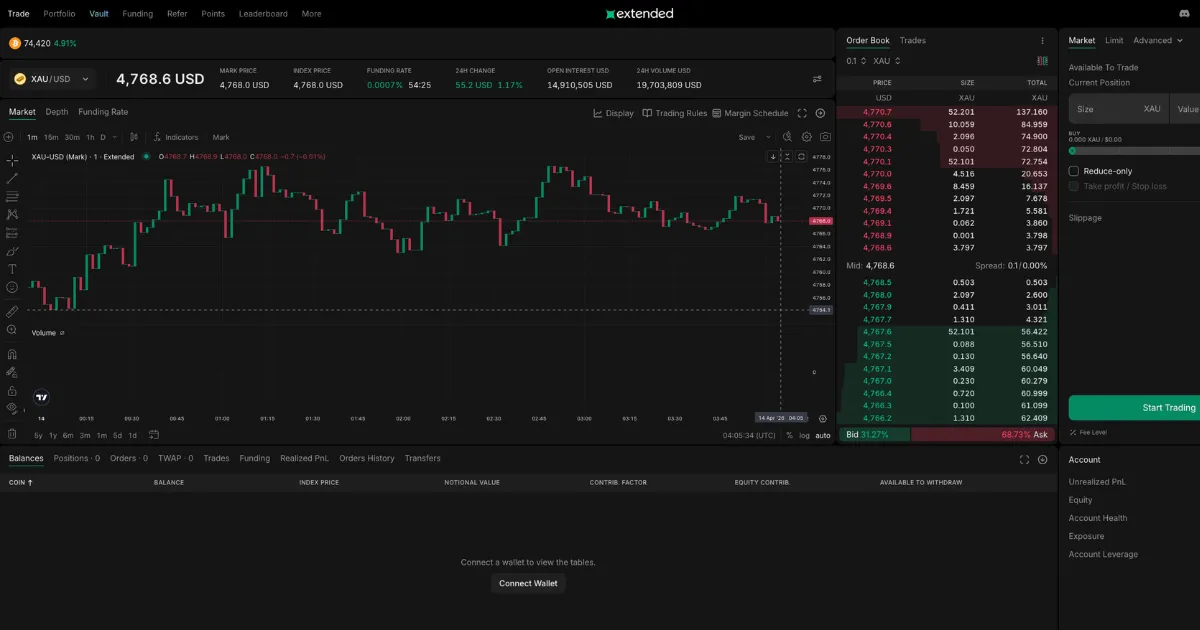
Moving from compliance to TradFi market access, Extended surpassed $100 billion volume with $200M+ TVL — #1 on Starknet by TVL. The team is ex-Revolut (CEO Ruslan Fakhrutdinov ran Revolut's crypto business), and the fintech pedigree shows in everything from the order types to the interface layout. Over 80 perpetual markets now, including gold, oil, S&P 500, EUR/USD alongside crypto — all with up to 100x leverage. Maker fees are 0%, taker fees 0.05%, and gas on Starknet runs $0.01–$0.10 per transaction, making it one of the cheapest venues for active trading.
The Starknet migration was a smart move. Extended supports full EVM wallet compatibility — connect MetaMask, and the platform handles Starknet account abstraction behind the scenes. I tested onboarding from Arbitrum and it was seamless, which is a real differentiator when most Starknet apps still require a native wallet setup.
The vault has delivered around 70% APR recently, though that fluctuates. Season 1 distributes 1.2M points weekly, TGE planned for H1 2026.
The roadmap is heading toward unified margin with integrated lending and spot — building a full-stack trading platform on its own EVM-compatible L2.
8. Pacifica
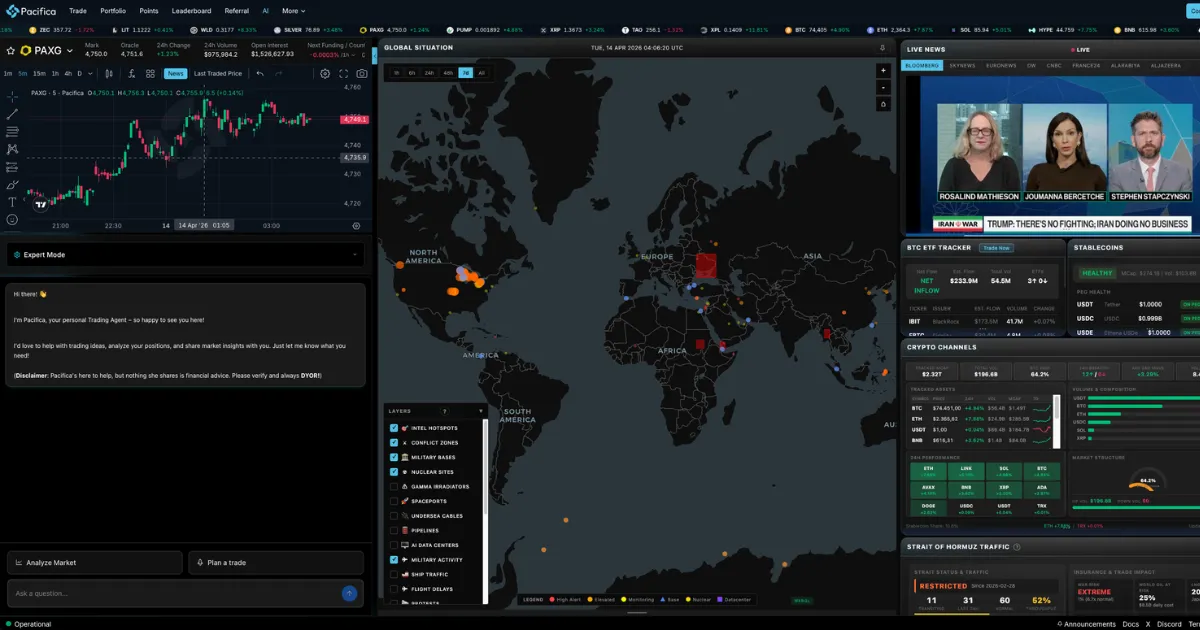
After Drift's notorious exploit which affected two biggest perp DEXs on Solana, Pacifica's hybrid CLOB is outpacing Drift and Jupiter Perp at ~$10.6 billion monthly despite still being in closed beta. The architecture splits execution: offchain CLOB for speed, onchain settlement on Solana for self-custody.
The team — Binance, FTX, and Jane Street alumni — built something you can feel in the fills. Orders execute with the precision of a quant desk, not a DeFi app.
What sets Pacifica apart beyond raw execution is the AI layer. The platform has a built-in AI Trading Agent (live at app.pacifica.fi/agent) that goes beyond generic chatbot territory. It learns from your actual trading patterns to offer personalized position analysis, trade ideas, and risk insights. You can select up to three technical indicators or let the AI choose for you, and it aggregates live news with sentiment analysis — flagging whether a development is bullish or bearish so you can react faster. The AI agent runs on a separate wallet architecture for security, meaning it can analyze and suggest without having direct access to your funds. For a team with OpenAI and DeepMind engineers building the backend, this isn't a marketing feature — it's core product.
Paradigm backs Pacifica — same investor behind Paradex. Both are betting hybrid CLOB models with institutional-grade execution win the next phase, just on different chains. Pacifica is self-funded operationally, making a future airdrop highly likely given how every other Solana perp protocol has distributed tokens. Snapshots happen Thursday 00:00 UTC, and the team slashes points for wash trading — meaning the volume is cleaner than most pre-TGE platforms. The closed beta creates scarcity in the user base, and historically, that's where early participation pays off most.
9. Avantis
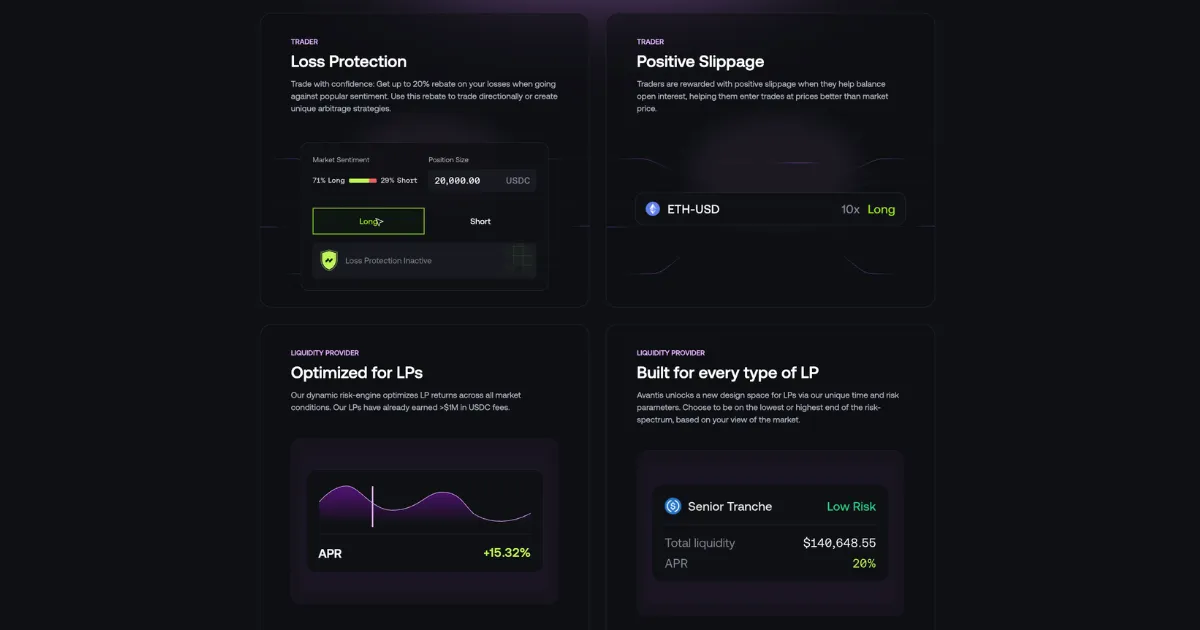
Staying on the alternative fee model theme, Avantis has crossed $20 billion in cumulative volume with TVL surpassing $100 million, making it the largest DEX on Base by volume. Backed by Pantera Capital, Founders Fund, and the Base Ecosystem Fund, Avantis offers leveraged perps on crypto, forex, commodities, and indices with up to 500x leverage.
The standout feature is zero-fee perpetuals — traders only pay fees when they profit, not when opening or closing positions. There's also a loss rebate program that refunds up to 20% of losses when you trade against the crowd. The dual-oracle system (Pyth + Chainlink) cancels trades if prices diverge more than 5%, which is a meaningful safety feature I haven't seen elsewhere.
The AVNT token is already launched, so if you're looking for clean airdrop, Avantis might not be a perfect fit. However, you can save on trading fees by staking AVNT tokens. The more you stake and trade, the higher your discount tier, with up to 25% discount for 250,000 staked AVNT and $30M 30-day trading volume.
10. Ostium
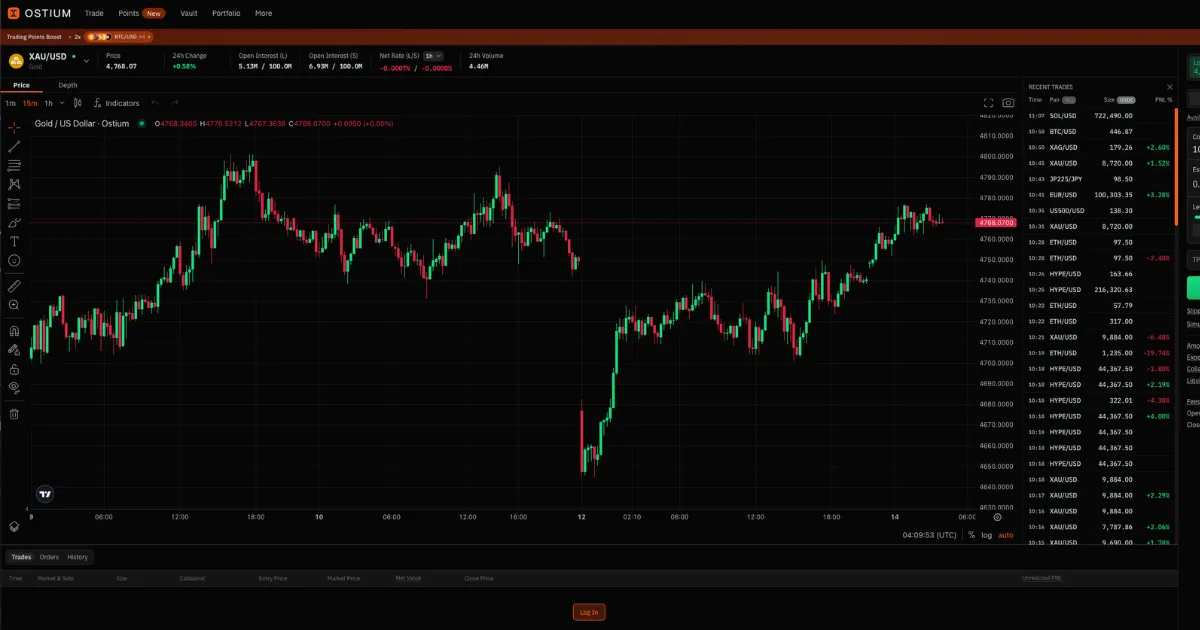
On the RWA side, Ostium offers something different from Hyperliquid's orderbook approach. It processed $34 billion+ cumulative and captured over 50% of onchain gold open interest during 2025. Synthetic RWA perps on Arbitrum — indices, commodities, forex — with up to 200x leverage. The pool-based, two-tiered LP design (Liquidity Buffer + Market Making Vault) means LPs earn from volume growth, not just trader losses. OLP vault runs ~28.7% APY on USDC.
I use Ostium specifically for weekend macro plays. Gold perps on a Saturday during geopolitical escalation, forex exposure on a Sunday night before Asian markets open — that's infrastructure that didn't exist in DeFi a year ago. Raised $27.8 million from General Catalyst, Jump Crypto, Coinbase Ventures, and Wintermute. TGE expected Q2 2026. The real TAM isn't crypto traders wanting RWA — it's the $10 trillion monthly CFD broker market.
11. Nado
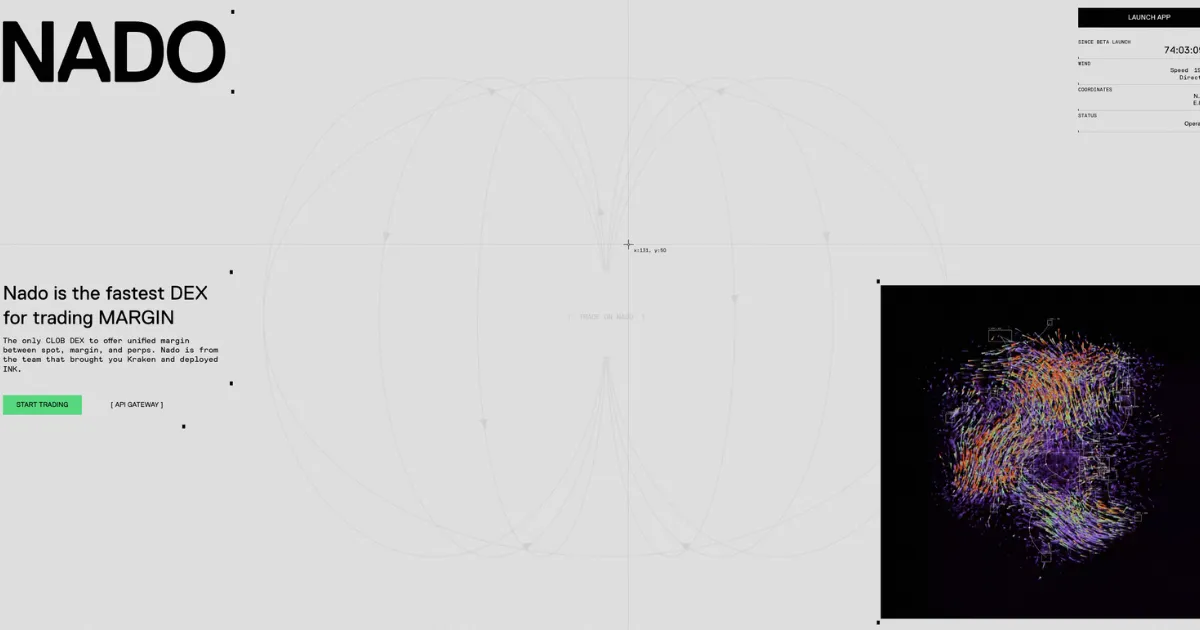
Finally, the newest entrant worth watching. Nado hit $42 billion cumulative on Ink (Kraken's L2) in four months. It's the only CLOB DEX with unified margin across spot, margin, and perps in one account: spot ETH offsets BTC perps shorts automatically, margin requirements drop for hedged positions. For anyone running funding rate arb or basis trades, this unified collateral netting is a genuine capital efficiency edge — it's why I started testing Nado for same-platform strategies where I want lower margin requirements without splitting across venues.
Nado supports not only crypto trading, but also 24/7 stocks trading (META, GOOGL, NVDA, and TSLA perps) with up to 20x leverage, using BTC, ETH, USDT0 or NLP as collateral.
AI-driven trading application is another thing that sets Nado apart: Nado CLI and MCP Server. Instead of building a better UI, they're giving AI agents the tools to use the exchange directly. The MCP server runs entirely locally — no open ports, private keys never leave your machine, never sent to Anthropic or OpenAI. You get a disposable hot key through a linked signer, the AI stages every trade in human-readable format, and every write operation requires your explicit approval before executing. Machine speed, manual oversight.
The implications are real. You can plug Nado's execution layer into Claude Cowork or OpenClaw, combine it with on-chain sentiment tools like TrueNorth, connect your local knowledge base and proprietary strategies, and suddenly you're not running a script — you're orchestrating a system. Tell your agent to monitor account health every hour, map liquidation risks across positions, cross-reference with live volatility, and stage a delta-neutral hedge if risk exceeds your threshold. The agent calculates position sizes, builds the order, and asks you to confirm. That's the workflow.
We went from screaming on the trading floor to clicking screens to deploying algo black boxes. The next evolution isn't a sleeker interface — it's the interface disappearing entirely. Nado just gave everyone the infrastructure to participate in that shift.
Anti-sybil is aggressive on Nado (invites unlock only after $1M volume), keeping the user base real but growth slower. One thing worth noting: the platform hasn't been stress-tested during a real crash yet. Kraken's IPO timeline (H1 2026, ~$20B valuation) adds pressure to ship a credible product — which, oddly, is a positive signal. No native token — a point program is live to reward early traders which potentially earn you airdrops.
Farming Strategy: Funding Rate Arbitrage
Most perp DEX articles cover the platforms but skip the strategy that actually makes farming them profitable. Funding rate arbitrage is a form of cash-and-carry trade in perpetual futures, and it's become the go-to approach for serious DeFi traders running volume across multiple platforms in 2026.
How Funding Rates Work
Perpetual contracts don't expire, so they need a mechanism to stay anchored to spot price. That mechanism is the funding rate — a periodic payment between longs and shorts. When funding is positive (which it usually is in most perp markets), longs pay shorts. When it's negative, shorts pay longs. Funding typically settles every 8 hours, though some platforms run hourly.
The Setup
The core idea is straightforward. You open a long on one DEX and a matching short on another — same asset, same size. Price moves cancel out. But the funding rate payments don't cancel, because you've placed your short on the platform where funding is positive (meaning shorts receive payment).
Here's a concrete example. Say BTC spot is at $65,000 and the perpetual is trading at $65,100 with a +0.01% funding rate every 8 hours:
You go long $10,000 BTC on one DEX, short $10,000 BTC on the other. If BTC moves up or down, gains and losses offset. But with +0.01% funding, your short position receives $10,000 × 0.01% = $1 every 8 hours. That's $3/day, roughly $90/month — all without directional exposure to BTC's price.
Scale that to $100K and you're looking at $900/month in funding alone, before points. And because you're generating real trading volume on both platforms, you're accumulating airdrop points simultaneously.
Why Split Across Two DEXs?
The reason you open long and short on different platforms rather than the same one is sybil detection. Most perp DEXs track accounts that open opposing positions on the same platform and flag them — potentially blacklisting you from airdrop rewards or slashing points. By splitting across venues, each platform sees legitimate one-directional trading activity.
This also explains why the strategy pairs naturally with the platforms on this list. I typically run my long on Hyperliquid (deepest liquidity, tightest spreads on majors) and my short on edgeX or GRVT (where I'm farming pre-TGE points). The short leg on the platform with the active points program turns the funding income into a secondary benefit — the primary value is volume-based point accumulation.
When farming perps, it's worth noting that altcoins with lower market caps generate higher reward points on most platforms compared to BTC or ETH. The trade-off is real though: low-cap tokens mean wider spreads, higher volatility, and a much greater chance of getting liquidated on one leg if margin isn't actively managed. For less experienced traders, sticking to BTC or ETH pairs is the safer path — lower point yield but dramatically lower risk of blowing up a position.
Key Risks and Practical Steps
The theory is clean, but execution has friction. A 3-second delay between filling the long on Hyperliquid and the short on edgeX costs ~0.4% on entry, which compounds when you're running this daily. Funding rates aren't static either — they can flip negative during sharp selloffs, turning your short from income-generating to cost-bearing.
Funding rate arbitrage reduces directional risk, but it's not failure-proof. The short leg can still get liquidated during a violent rally if leverage is too high.
What to mitigate risks:
- set alerts for funding rate differentials exceeding 0.02% and rebalance every 8 hours.
- Use stop-losses and take-profits on both legs.
- Never go above 5x for arbitrage positions — the funding yield doesn't justify liquidation risk at higher leverage.
- Monitor positions actively, especially during weekends when volatility spikes on thinner liquidity.
- Always keep enough margin buffer to survive a 10-15% move against your short before you can rebalance.
- Use bots or tools to help manage arbitrages
FAQ
Which perp DEX has the highest volume in 2026? Hyperliquid leads with $4.24 trillion cumulative
Can you trade stocks and commodities on perp DEXs? This is the biggest DeFi trends in 2026. Hyperliquid's HIP-3 holds $2.3 billion in RWA open interest. The licensed S&P 500 perp hit $100M daily volume. Oil perps regularly flip ETH. Ostium, Extended, and Avantis also offer RWA perps — all trading 24/7, including weekends.
How does funding rate arbitrage work? Long on one platform, short on another at equal size. Price moves cancel out, but you collect funding payments on the short leg when rates are positive. Split across different DEXs to avoid sybil detection. Use low leverage (5x or under) and monitor rate changes every 8 hours.
Best perp DEX for airdrop farming in 2026? Pre-TGE: GRVT (28% community, after June), Variational (50% community), Pacifica (Paradigm-backed closed beta), edgeX (imminent TGE), StandX (points live), Nado (live point program). Pair farming with funding rate arbitrage for the most capital-efficient approach.
Disclaimer: This article is for informational purposes only and does not constitute financial advice. Crypto investments carry significant risk including potential loss of capital. Always do your own research before making financial decisions. Figures flagged as estimates where exact cumulative data was unavailable.

.png)

%201%201.png)