What is Monad? Top 10 Crypto Apps to Earn on Monad
7 mins

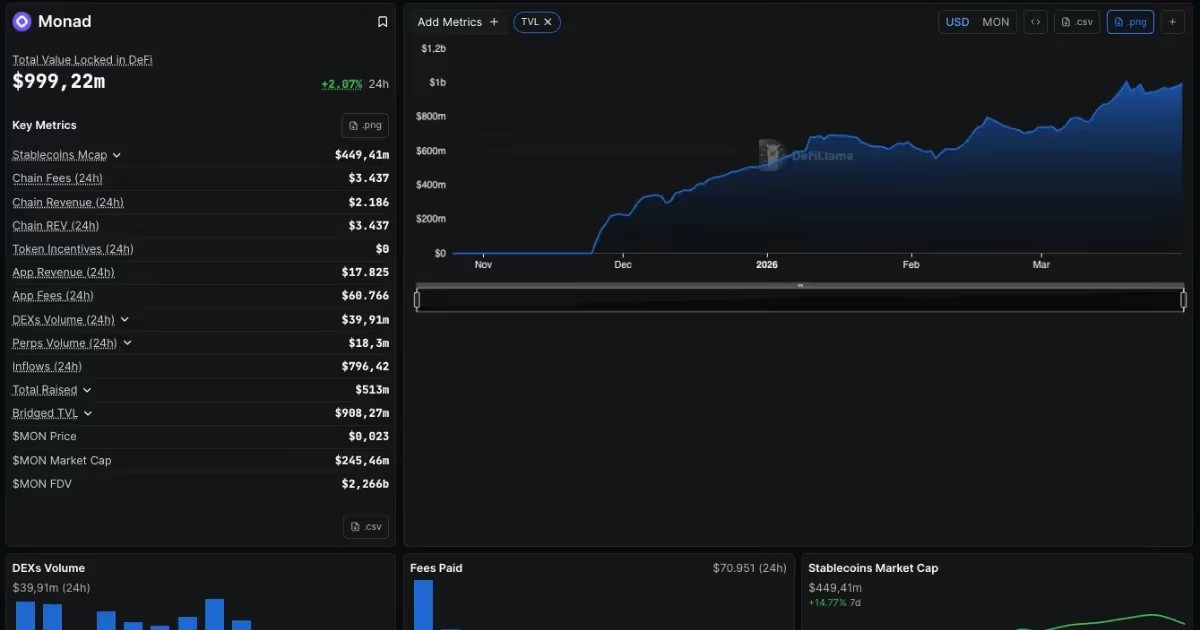
I bridged assets to Monad the week after mainnet launched, mostly out of curiosity. Four months later, TVL on the chain has surged to nearly $1 billion, daily DEX volume is running around $39 million, and I'm still finding new apps worth testing every week.
Monad isn't just another "Ethereum killer" pitch, it's a functioning high-speed EVM chain with a growing ecosystem of apps that are actively rewarding early users through the Monad Momentum incentive program.
Here's real user experience using Monad, which apps are worth your time, and where the earning opportunities are now in the ecosystem.
What Is Monad and What Makes It Different From Other EVM Chains?
Monad is a Layer 1 blockchain that runs the Ethereum Virtual Machine but processes transactions in parallel, hitting up to 10,000 TPS with finality under one second. For users, that means swaps confirm before you've even switched tabs, and gas fees are essentially negligible.
What makes Monad genuinely different isn't the spec sheet, it's the UX. When I first connected my MetaMask wallet and tried a swap on Kuru, I kept refreshing because I thought the transaction hadn't gone through. It had. The confirmation was so fast that I assumed it was still pending. Coming from Ethereum mainnet or even some L2s where you wait a few seconds and watch the spinner, this felt jarring in the best way.
The chain launched on November 24, 2025, after Category Labs (formerly Monad Labs) raised over $225 million from Paradigm, Coinbase Ventures, Dragonfly Capital, and others. The public token sale on Coinbase's platform raised roughly $269 million from more than 85,000 participants — the first token sale conducted through Coinbase's ICO platform. The chain went live with native USDC support, Chainlink Data Feeds, LayerZero cross-chain messaging, and wallets like MetaMask, Phantom, and Rabby all working out of the box.
According to DefiLlama, Monad's TVL recently surged about 45% in a single month, now sitting at nearly $1 billion, with stablecoin TVL capturing $449 million. That growth is happening despite a broader bear market and MON trading below its $0.025 public sale price at around $0.022 currently. The gap between ecosystem activity and token price is something worth paying attention to.
Why the Monad Ecosystem Is Worth Exploring Now
The ecosystem has over 290 listed dApps spanning DeFi, gaming, AI, prediction markets, and NFTs. Blue-chip protocols like Uniswap V4, Curve, and PancakeSwap are live alongside Monad-native projects that were built specifically for the chain's speed advantages.
Another reason to explore now is Monad Momentum — the ecosystem's incentive matching program. Unlike traditional grants that just hand money to dev teams, Momentum requires teams to invest their own resources into user acquisition first, then matches their spend up to 1:1 with MON tokens. This skin-in-the-game model means the projects selected for Momentum are the ones most serious about building real traction, not just farming a grant and disappearing.
Wave 1 projects were notified in October 2025. Wave 2 applications closed at the end of December 2025, and Wave 3 is currently ongoing. The projects below are among those actively distributing rewards through Momentum.
If you are still not convinced, just look at the growth of TVL and volume on the chain. Compare to other emerging chains like MegaETH, or Plasma, Monad is definitely outperforming with real onchain activities on native apps, which signals users' interests to the ecosystem.
Gotta say sorry to Monad:I FUDed it after the launch for failing to attract TVL, dapps, and users, especially after such a hyped TGE.I also thought MegaETH’s successful launch would put even more pressure on Monad.Yet MegaETH’s slow growth is a redemption for Monad.It’s fair play for both when the market rebounds. I also think Monad could explore more incentive campaigns.Especially because MegaETH’s points campaign should launch soonish too. Source: DeFi Ignas
The Monad Ecosystem at a Glance
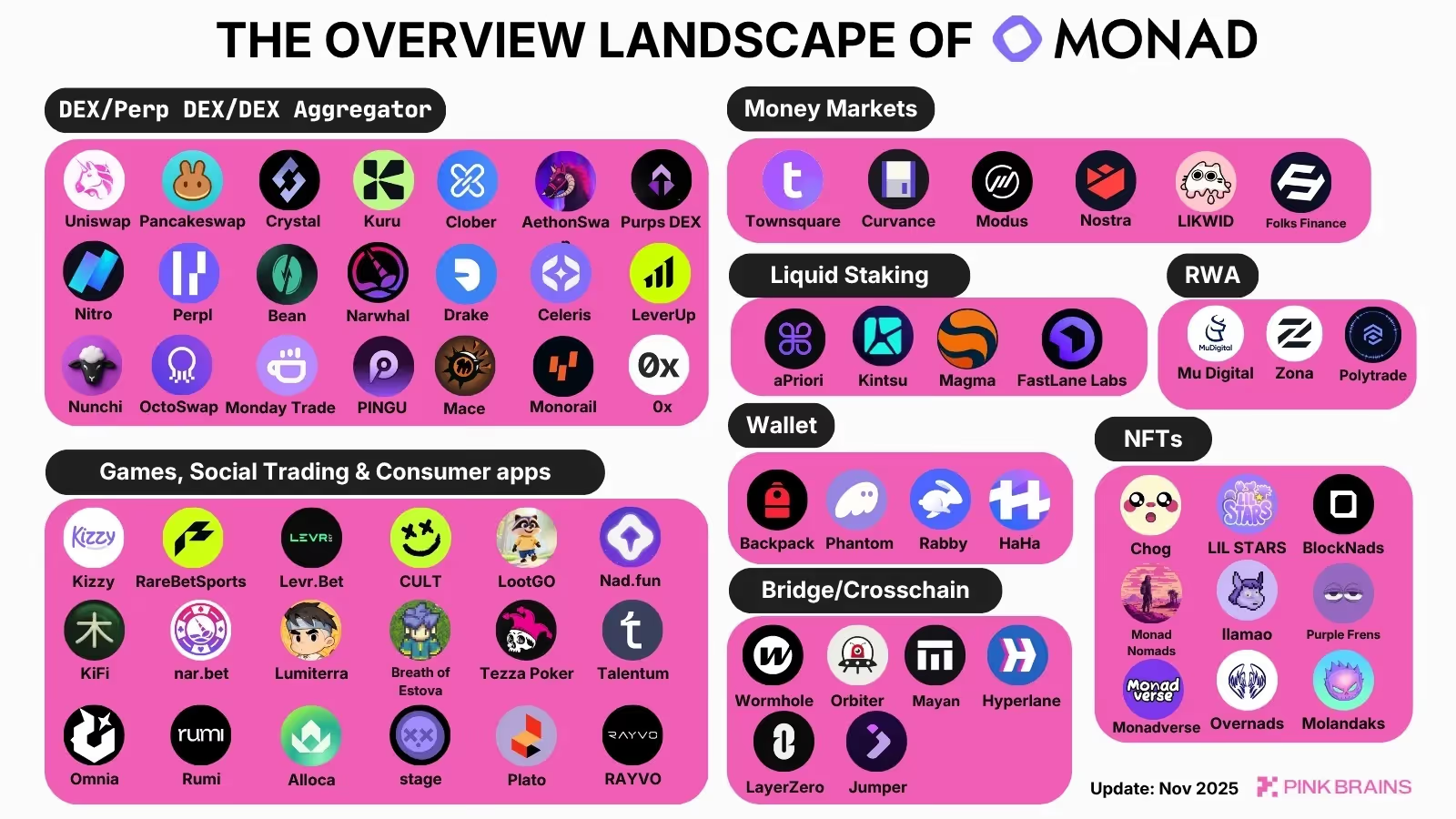
The ecosystem is broader than most people realize. Beyond the Momentum apps, you've got:
Liquid staking through aPriori, Kintsu, and MagmaDAO. Spot DEXs like Kuru, Clober, and Crystal. Perpetual DEXs including Drake, Celeris, and Narwhal Finance. Lending through Townsquare and Curvance. DEX aggregators like Monorail. Prediction markets from Kizzy, Levr.Bet, and RareBetSports. AI and agentic tools from Symphony and TypeX. Plus gaming, NFTs, and early RWA tokenization plays.
It's not a ghost chain — though critics have pointed to low onchain fees (around $2,000 daily at some points) as a concern. That's a fair flag. The tension between impressive TVL numbers and modest fee generation is something worth watching closely. High TVL with low fees could mean a lot of parked capital that isn't actively transacting.
Top 10 Apps to Earn on Monad
These are the Momentum-backed projects I've found most worth testing. Each one is rewarding early mainnet users in some form, such as points, tokens, or positioning for future airdrops.
1. Kuru Exchange
Kuru is building a fully onchain Central Limit Order Book (CLOB) — essentially trying to replicate the CEX trading experience but decentralized. Backed by Paradigm, it's the most credible spot DEX native to Monad. The order book feels responsive in ways that similar attempts on slower chains never could. Rewards started in the first week of mainnet.
When you place a limit order on Kuru, it is filled within a block. The spread on major pairs was tighter than I expected for a chain this young. The UI is clean but still minimal. But don't expect the Binance dashboard yet, but the execution is legitimately fast.
[Screenshot opportunity: Kuru order book interface showing spread and confirmation time]
2. Drake Exchange
A perpetual trading platform offering up to 50x leverage on crypto markets. If you've used GMX or Hyperliquid, the concept is familiar — but Drake is betting that Monad's speed gives it an edge on execution latency. Connect your wallet, deposit funds, and trade directly for points and rewards.
3. Kizzy
A social prediction and betting platform where you predict outcomes on social media trends. It's a lighter-weight entry point into the Monad ecosystem if heavy DeFi isn't your thing. You can get early access using the code "MOMENT" at kizzy.io.
4. Lumiterra
An MMO sandbox game with AI-driven agents, plus a separate product called Lumipad for AI agent launching. The gaming angle sets it apart from pure DeFi plays. This is the kind of app that specifically benefits from Monad's speed — in-game transactions need to feel instant, and they do here.
5. Levr Bet
Decentralized leveraged sports betting covering MLS, MLB, and other leagues. The "leveraged" part is what makes it interesting — you're not just predicting, you're sizing positions with varying risk/reward. Sign up for early access at levr.bet/momentum.
6. Monday Trade
A spot trading DEX that's trying to merge the simplicity of decentralized swaps with centralized exchange depth. Still early, but worth signing up at app.monday.trade to secure early user status before rewards distribution ramps up.
7. Omnia
A battler-style adventure game where you compete with virtual pets on leaderboards. Lighter and more casual than Lumiterra, but with airdrop potential for mainnet participants. Check it out at omnia.lol.
8. SeerTrade
A trading platform built around analytics and social insights. The Founder Pass NFT gives you exclusive beta access and puts you in line for early rewards. Worth minting if you want to lock in early status — visit seer.trade.
9. Symphony
An AI agent protocol for financial markets on Monad. Think automated trading strategies executed by AI agents onchain. It's early and experimental, but the "agentic DeFi" narrative is heating up. Join at ai.symphony.io.
10. RareBetSports
Sports predictions covering major leagues with leaderboard-based rewards. Straightforward — make predictions, climb the board, earn rewards. Get started at rarelink.rarebetsports.io.
Other Projects on My Radar
- TeleMafia: a Telegram-based mafia game where you build your family and compete for rewards.
- FluffleWorld: a cozy island-building and habit-forming game where you earn by staying active and consistent.
- Bro.fun: a social engagement platform where completing simple tasks earns points and potential rewards.
- Kinetik AI: a decentralized platform for tracking and monetizing IP data through AI-powered analytics. Users can sign up with their email and wallet to position for early rewards and airdrops.
What I Learned the Hard Way
I wanted to get positioned across Monad's top ecosystem apps early, deposit stablecoins, and start accumulating points and rewards before the crowd showed up.
The Friction: Bridging was my first headache. I used the LayerZero-powered bridge expecting a straightforward transfer, but the initial wave of bridging activity created congestion that slowed things down. The official bridge experience has since improved, but during the first few weeks, a big chunk of bridged assets actually flowed right back out — analysis from Blockworks noted that roughly 75% of assets bridged in during the early weeks rotated back to other chains. That farm-and-rotate behavior made the early liquidity numbers unreliable.
The other friction point is MON's price. If you bought MON at the $0.025 public sale price. It spiked to nearly $0.049 in the first days, then bled down to around $0.016 at the all-time low in February 2026. As I write this, it's sitting around $0.022 — still below the ICO price. That's a reality check for anyone expecting instant returns from the token itself. The ecosystem activity is growing, but the token hasn't kept pace.
So my advice is to stop watching the MON chart and focus on using the apps to maximize rewards. Points, rewards, and positioning for native token airdrops from Momentum projects are where the real upside is right now, instead of trading MON.
For bridging assets to Monad, I switched to using Jumper Exchange for cross-chain swaps and bridging, which aggregates multiple bridge routes and found cheaper, faster paths than going direct.
[Screenshot opportunity: Bridge comparison — official bridge vs. aggregator showing time/cost difference]
How to Get Started on Monad
Setting up on Monad is genuinely straightforward if you've used any EVM chain before.
Getting started with Monad is straightforward, especially since it supports the same tools and wallets that most crypto users are familiar with. Here’s a quick guide to prepare for mainnet and start earning through the Momentum ecosystem.
1. Set Up a Wallet and Connect to Monad
Monad is fully EVM-compatible, so you can use popular crypto wallets such as MetaMask, Rabby, Phantom, Backpack Wallet, and OKX Web3 Wallet. You can also try Haha Wallet, a native Monad wallet built specifically for the network.
2. Bridge or Transfer Assets to Monad
Transferring cross-chain assets like USDC to Monad will be simple through several major bridges and cross-chain platforms. Supported options include Wormhole, LayerZero, Hyperlane, Mayan Finance, and Orbiter Finance. You can also use Jumper Exchange, which aggregates multiple bridges to help you move tokens across chains seamlessly.
Before bridging, always confirm bridge links from Monad’s official website or verified social channels to stay safe from phishing attempts.
3. Explore Monad Apps and Join Early
After your wallet is set up and funded, you can start exploring the Monad Momentum apps to position for rewards:
- Visit featured apps on Monad App Hub
- Connect your wallet and complete any onboarding steps.
- Use access codes where required
- Join the project’s Discord or Telegram group to stay updated on reward activities.
Early participation helps you experience Monad’s fast performance firsthand while earning rewards and points from ecosystem apps.
What to Watch Next
Here's the honest picture. Monad's technology is legitimately impressive — the speed and UX are the best I've experienced on any EVM chain. The ecosystem is growing fast, with 300+ projects and serious infrastructure partnerships. TVL is climbing even in a bear market.
But there are real risks. MON is trading below the public sale price. A massive token unlock begins in November 2026, when team and investor allocations (roughly 47% of total supply) start vesting quarterly through 2029. That overhang will create sustained sell pressure unless ecosystem demand grows fast enough to absorb it. And with only about 200 validators, Monad is less decentralized than Ethereum and hasn't been stress-tested through a major market crisis yet.
I'm keeping my positions active across the top Momentum apps. The play right now isn't MON price appreciation — it's earning rewards, points, and positioning for native app token airdrops before the ecosystem matures and the easy opportunities disappear. If the fee switch governance vote or any major ecosystem catalyst changes the thesis, I'll reassess.
The chain is fast, the apps are real, and the Momentum incentives won't last forever. That's the window.
FAQ
Is it too late to earn the Monad MON airdrop?
The original MON airdrop for testnet users has ended. However, several Monad Momentum apps are planning their own native token airdrops for mainnet users, and there's speculation about a possible second wave of official MON distribution as mainnet activity expands. Using Momentum apps now is the best way to position yourself.
What wallets work with Monad?
Any EVM-compatible wallet works — MetaMask, Rabby, Phantom, Backpack, and OKX Web3 Wallet are all confirmed. Haha Wallet is a Monad-native option built specifically for the network.
How do I bridge assets to Monad?
You can use Wormhole, LayerZero, Hyperlane, Mayan Finance, Orbiter Finance, or Jumper Exchange. Native USDC is supported from launch through Circle's integration, making stablecoin transfers straightforward.
Is Monad safe to use?
Monad's client is open-source under a GPL-3.0 license and has been audited. The chain uses MonadBFT consensus and has over 200 validators. That said, it launched less than five months ago and hasn't been battle-tested through extreme market conditions. Use standard DeFi caution — don't deposit more than you can afford to lose, verify contract addresses, and always check official links.
How fast is Monad compared to Ethereum?
Monad processes up to 10,000 transactions per second with finality around 400 milliseconds, compared to Ethereum's roughly 15 TPS and 12-second block times. In practice, transactions on Monad confirm almost instantly — it feels closer to using a centralized exchange than a blockchain.
What is Monad Momentum?
Monad Momentum is an ecosystem incentive matching program run by the Monad Foundation. It requires selected app teams to invest their own resources into user acquisition, then matches their spend with MON tokens up to 1:1. This means users of selected apps earn boosted rewards funded by both the project and Monad Foundation.
Disclaimer: This article is for informational and educational purposes only. It is not financial advice. DeFi protocols carry risk including smart contract bugs, liquidity issues, and market volatility. Always do your own research before depositing funds into any protocol.
.png)

%201%201.png)