Tokenized Stocks: How They Work and Where to Buy
8 mins


Buying Tesla at 3am on a Sunday, in $10 increments, from the same wallet that holds your stablecoins, from mostly anywhere. That's tokenized stocks, and it stopped being a niche experiment in 2026.
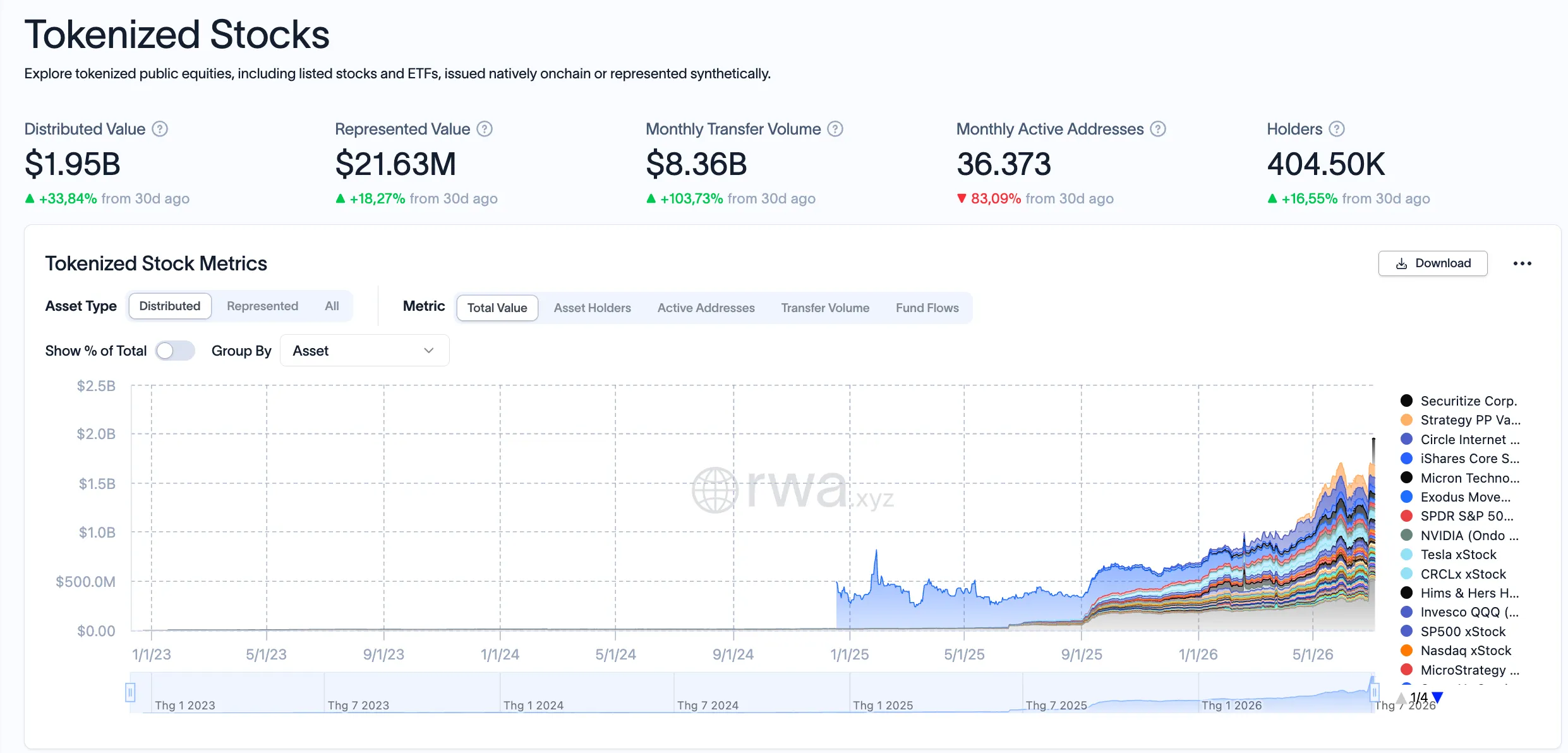
RWA tokenization, especially tokenized stocks, is the fastest-growing DeFi category on CoinGecko, up over 3,300% in listed tokens between January 2024 and May 2026.
This guide covers what tokenized stocks actually are, what rights you get (spoiler: it varies wildly), and which platforms are worth your KYC.
What Are Tokenized Stocks and ETFs?
Tokenized stocks are blockchain tokens that track real equities like Apple or Tesla. Spot versions are backed 1:1 by actual shares held with a regulated custodian; perp versions track price via oracles with no share behind them. You get price exposure, fractional ownership, and 24/7 trading, usually without voting rights.
That last clause is doing heavy lifting, and we'll come back to it. First, the taxonomy, because "tokenized stock" is one label covering three very different products.
Most tokenized ETFs are the same wrapper idea as tokenized stocks, but the underlying is a fund (S&P 500, a silver trust, a bond ETF).
Spot tokens vs perps vs synthetics
Spot tokens are the retail-facing product. A real share sits in regulated custody, and a token gets minted against it. The two biggest issuers are Backed (whose xStocks trade on Kraken, Bybit, and Solana DEXs) and Ondo Global Markets, which now holds roughly 70% of the tokenized equity market with over 430 stocks and ETFs.
Perps hold nothing. They're oracle-priced contracts anchored to the stock via funding rates, and they've quietly become the dominant instrument by volume. RWA perps did $524.8 billion in Q1 2026 alone, more than all of 2025 combined, becoming one of the biggest DeFi trends in 2026. The market voted, and it voted for leverage.
Synthetics - the old Synthetix-style oracle tokens with no backing and no funding mechanism - are mostly a museum exhibit at this point. Higher manipulation risk, no real reason to exist now that backed spot tokens do.
What you get, and what you give up
The pitch of tokenized stocks is real: 24/7 access, $1 minimums, instant settlement onchain, and composability. You can even use TSLAx as collateral on Jupiter Lend or Kamino and borrow stablecoins against it without selling.
The trade-off is also real: on most platforms you don't actually own a share. You own a claim on a share, or exposure to a share's price, depending on the legal wrapper. Slippage and compliance are also a risk when it comes to trading onchain.
Why Tokenized Stocks Exploded in 2026
Regulation did the heavy lifting. The GENIUS Act in 2025 and the SEC's Project Crypto turned tokenized equities from an offshore workaround into a product category serious institutions could touch. Then the dominoes: Ondo scaled past $1 billion in tokenized securities, Backpack put SEC-registered shares on-chain, and Robinhood took its stock tokens global.
The spot market is still small with around $1.9 billion total per RWA.xyz, which is a rounding error next to the $134 trillion global stock market. But the direction of travel is unambiguous: every major exchange either has a tokenized equity product or is building one, and the first week of July 2026 alone saw two launches that would have been headline events a year ago.
Best Platforms to Buy Tokenized Stocks in 2026
1. Kraken x xStocks: best exchange-native access
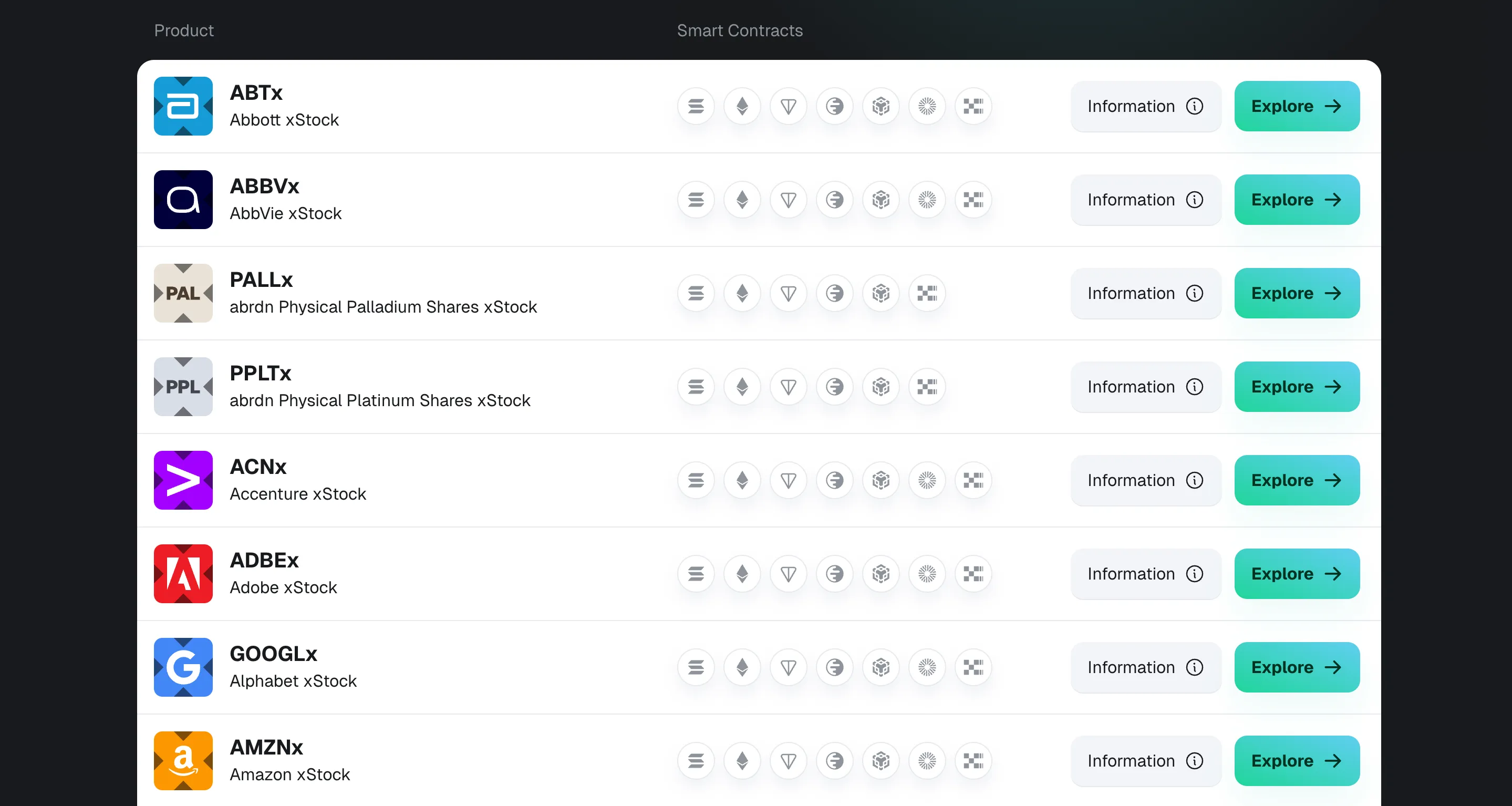
xStocks are issued by Backed, trade at 0% fee (spread around 0.25%), and live natively on Solana, Ethereum, TON, and Ink. The ecosystem is the point: the same token you buy on Kraken trades on Bybit, Gate.io, and Crypto.com through the xStocks Alliance, routes through Jupiter on Solana, and works as collateral on Kamino and Morpho. One token, many doors.
Not available in the US, UK, Canada, or Australia.
2. Ondo Global Markets: largest by AUM, most onchain native
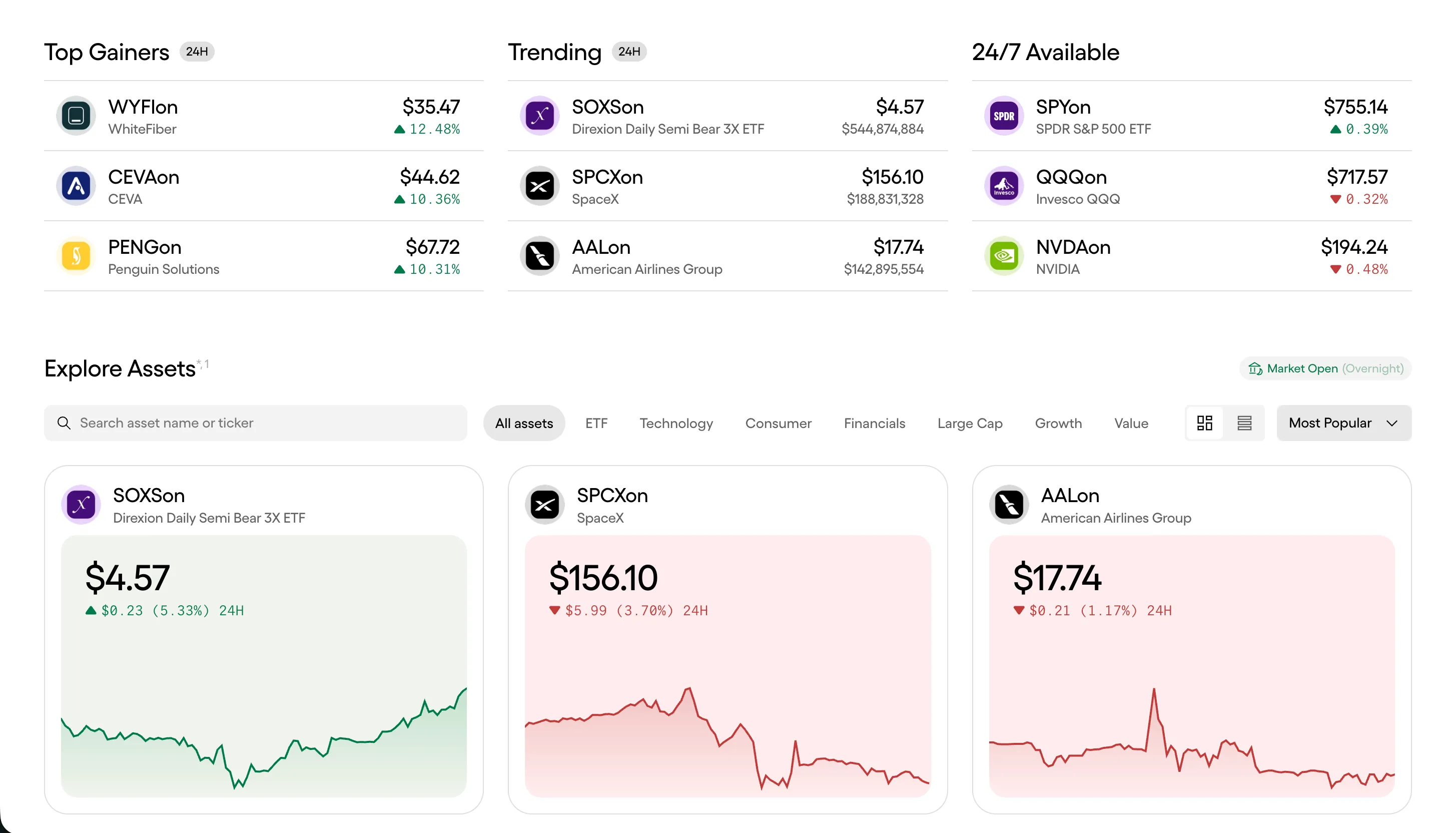
Ondo Global Market went from launch in September 2025 to category leader in under a year. The tokens are total-return trackers: dividends reinvest automatically, so your token count grows instead of receiving cash. Access runs through MetaMask on Ethereum, Jupiter on Solana, and CEXs like MEXC (100+ Ondo tokens at 0% fee, though MEXC's recent licensing flag from the Seychelles regulator is worth knowing about before you park size there).
DeFi composability is the differentiator. You can use Ondo Stocks collateral on Morpho, and Ondo Perps lets you post tokenized stocks directly as margin.
3. Robinhood Stocks Tokens: the giant fintech just went onchain
Robinhood's Stock Tokens are no longer an EU-only product: they now live on Robinhood Chain, an Arbitrum-based L2 that opened to the public in early July 2026. The same day, Arcus launched a new DEX incubated by dYdX Labs and built with Robinhood Crypto, offering 95 stock tokens with zero-fee 24/7 spot trading, 35 RWA perp markets on waitlist, and pre-IPO markets on the roadmap.
Today, non-EU and non-US users can buy Stock Tokens through the Robinhood app or trade them on Arcus. The next phase is bringing these assets into DeFi, enabling use cases like lending, borrowing, and perp futures trading.
4. Backpack Securities: best for real ownership and pre-IPO access
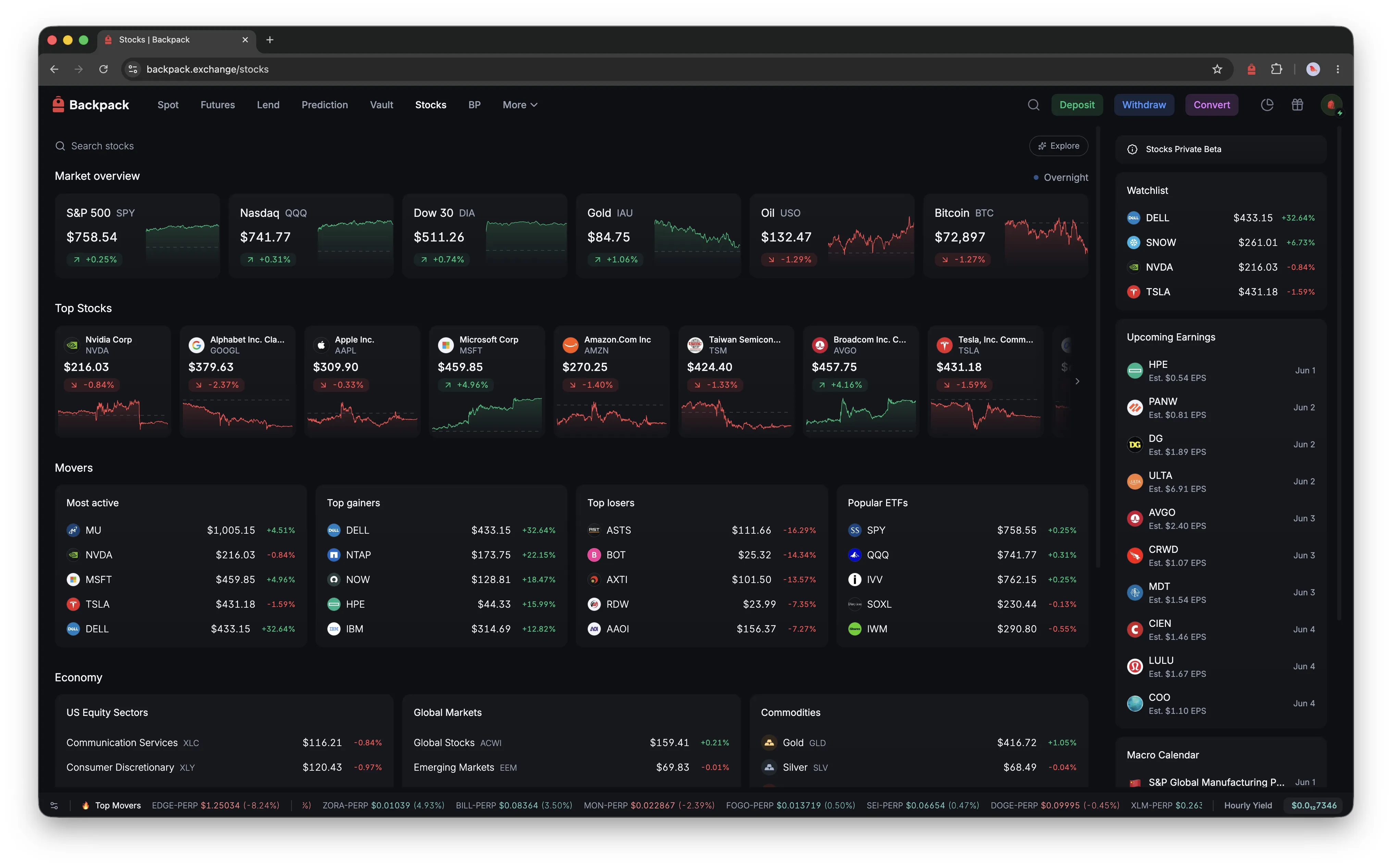
Backpack is different from most tokenized stock platforms because it's built on top of a US-regulated brokerage. That means you're buying real security entitlements, with the same ownership rights you'd get through brokers like Schwab or Fidelity. Those shares can then be tokenized on Solana through Sunrise. Backpack also works with Superstate to bring SEC-registered shares with real CUSIPs directly onchain.
The product is still in public beta, but it's already easy to use. You can buy real US stocks and ETFs like AAPL, TSLA, and SPY from the same account you use for crypto, funding it with either fiat or stablecoins. Trading is quote-based, so you simply accept the price shown. There are no separate trading fees, fractional shares start from just $1, and overnight trading is available for whole shares. Your existing crypto KYC also works for stocks. The trade-off is that some features, like stop-loss orders, APIs, and using stocks as collateral, haven't launched yet.
One of Backpack's biggest milestones was the launch of tokenized SpaceX shares. The token is backed 1:1 by real shares, can be redeemed into a brokerage account, and trades across Jupiter and Raydium. SPCX handled roughly $35-38 million in onchain volume on its first day and has since passed $86 million.
The exchange is also expanding its stock lineup quickly, with recent additions of big AI and tech companies like Micron (MU), Strategy (MSTR), AMD, Broadcom (AVGO), Seagate (STX), Western Digital (WDC), and SanDisk (SNDK).
Backpack Securities isn't available in the US, UK, UAE, or Japan, and it's not offered through Backpack EU.
4. Gemini x dShares: best for compliance-first EU access
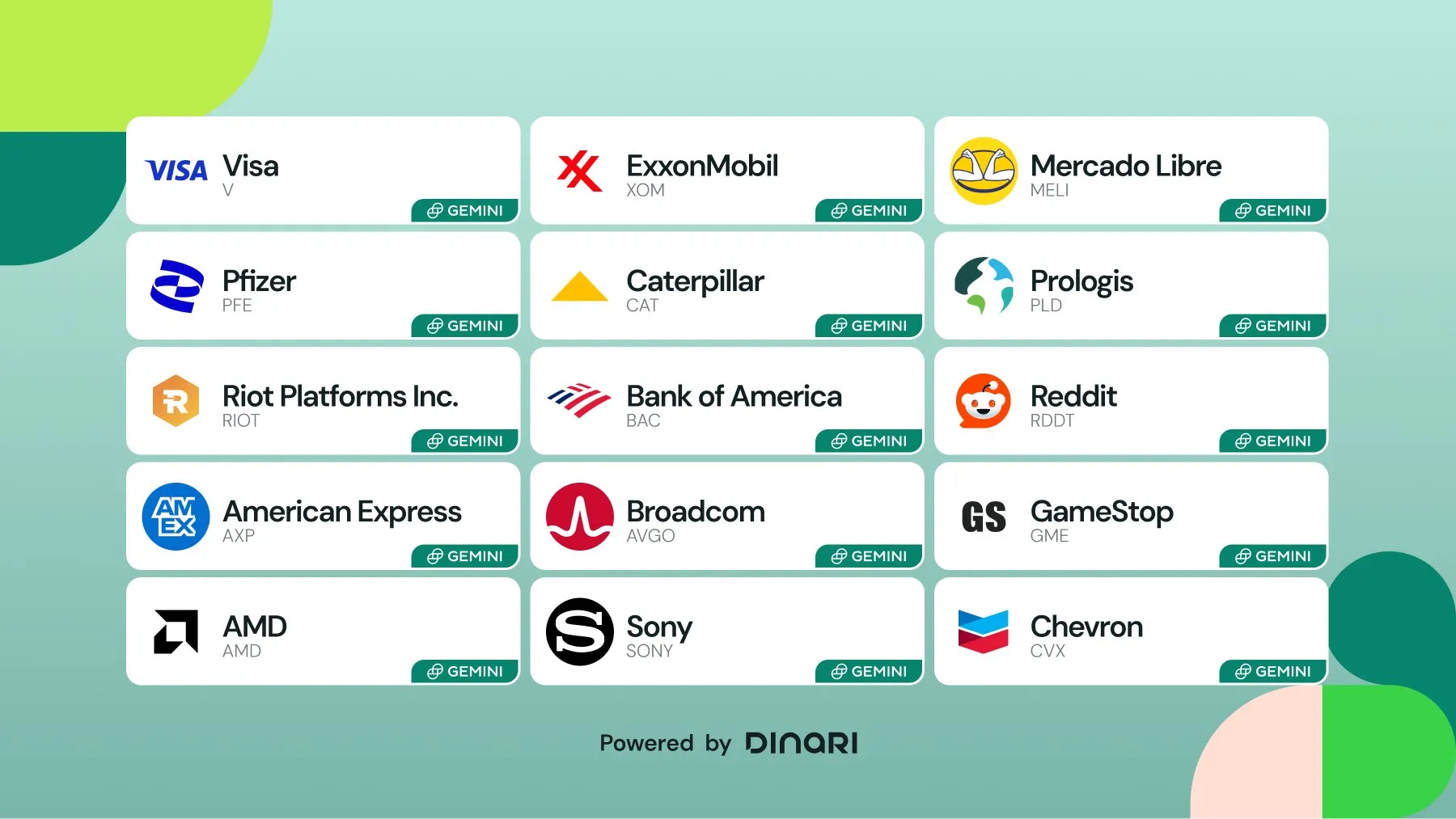
Gemini takes a more traditional approach. Its tokenized stocks are powered by Dinari's dShares, which are backed 1:1 by real US shares held by a regulated custodian. Dinari is both an SEC-registered broker-dealer and transfer agent, so the product is built within existing US securities rules rather than around them. Holders receive the same economic rights as the underlying stock where permitted, including dividends, which are paid in stablecoins or additional tokens depending on the distribution.
The trading experience is deliberately simple. There are no trading commissions, although Gemini builds a spread of around 0.4% into the quoted price. You buy at the quoted price, without worrying about order books or trading fees. The platform is available to eligible users across much of Europe, with new stocks added regularly as the catalog expands.
Best Platforms to Buy Tokenized ETFs in 2026
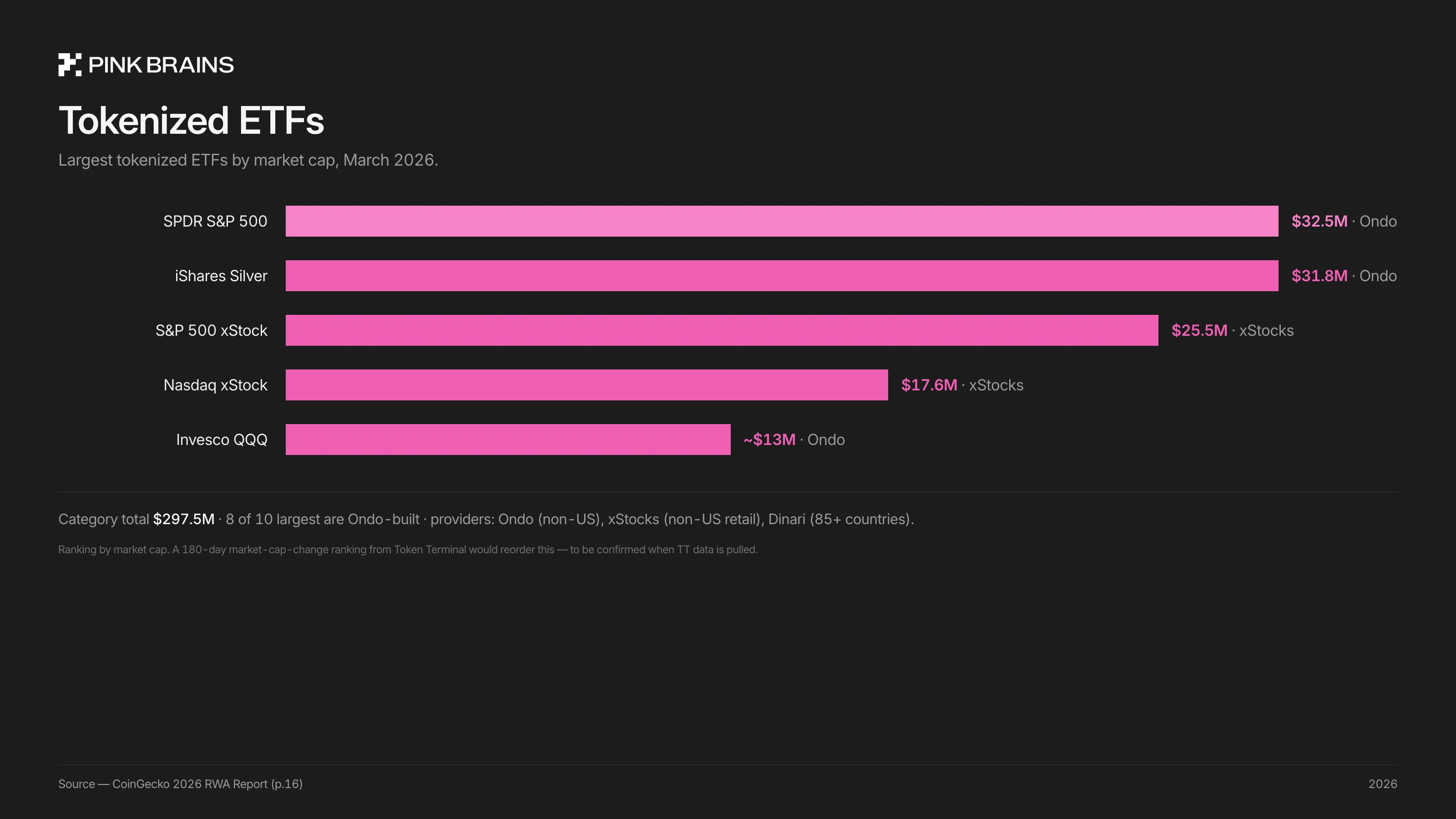
ETFs are now ~26% of the RWA tokenization category. The two biggest providers are Ondo, xStocks, and 8 of the 10 largest tokenized ETFs are Ondo-built. Top 5 by market cap:
- IVVon ($67.6M): Ondo iShares Core S&P 500
- SPYx ($42M): Ondo State Street SPDR S&P 500 ETF Trust
- IBITon ($41M): Ondo iShares Bitcoin Trust
- QQQon ($38.4M): Ondo Invesco QQQ Trust
- SPYon ($41.8M): xStock State Street SPDR S&P 500 ETF Trust
The S&P 500 has grown this year mainly because investors expect big U.S. companies to keep making more money, especially from the AI boom. Strong company earnings, continued spending on AI infrastructure, and hopes for lower interest rates have helped push stock prices higher.
Not interested in US ETFs, or looking for more ETFs beyond the S&P 500? Backpack offers ETFs from emerging markets like Korea, Japan, China, the UK, India, and more, as well as ETFs of Gold, Silver, Biotech, Semiconductor...
What Do You Actually Own on Each Platform?
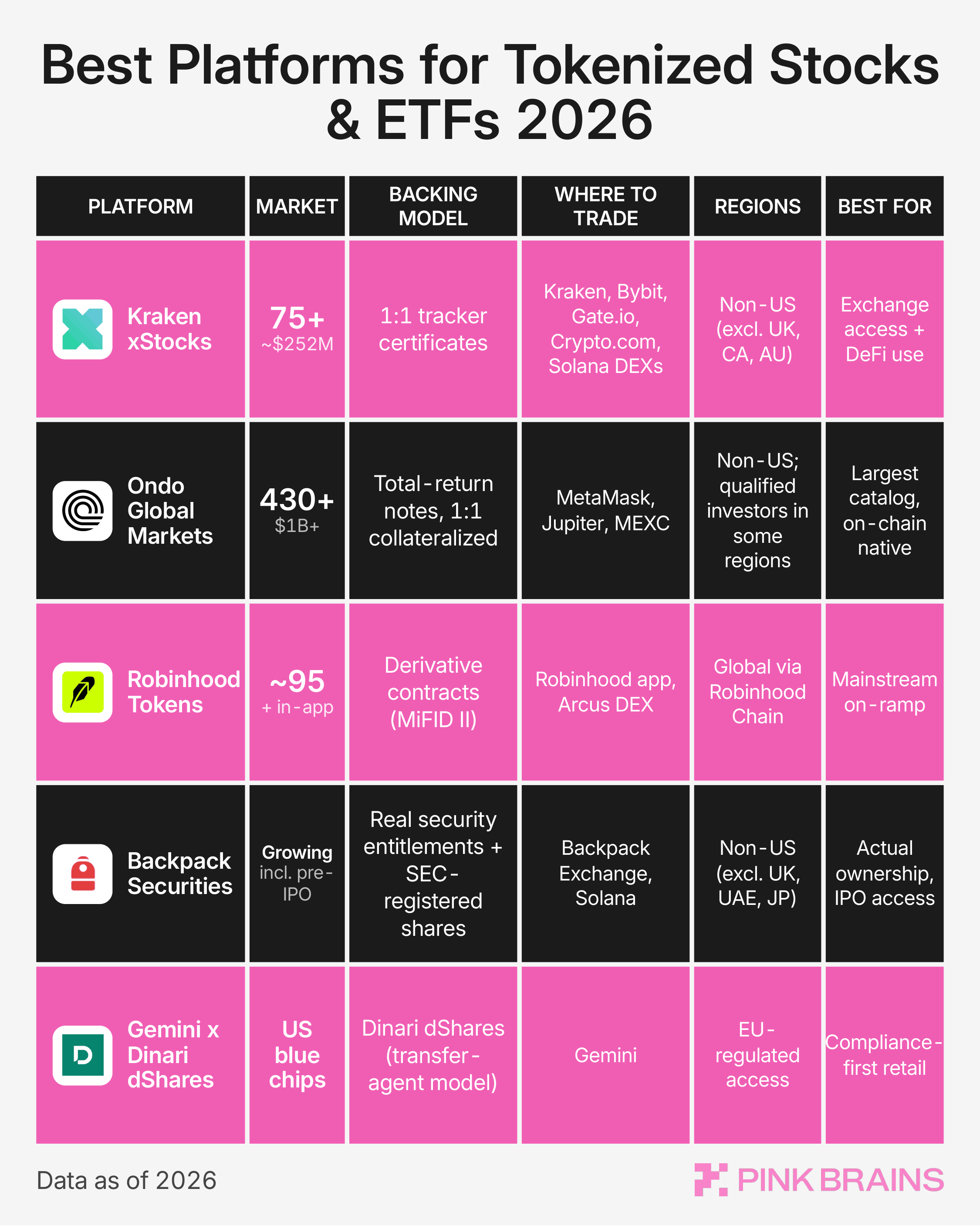
It depends entirely on the issuer's legal structure. xStocks and Ondo tokens are debt-like trackers, you get price exposure and reinvested dividends, but no voting rights or claim on the company. Robinhood's tokens are derivative contracts. Only Backpack's Superstate shares and Ondo's new US custodial product put registered shares behind the token.
From reviewing the issuer documentation across all 5 platforms, here's the summary:
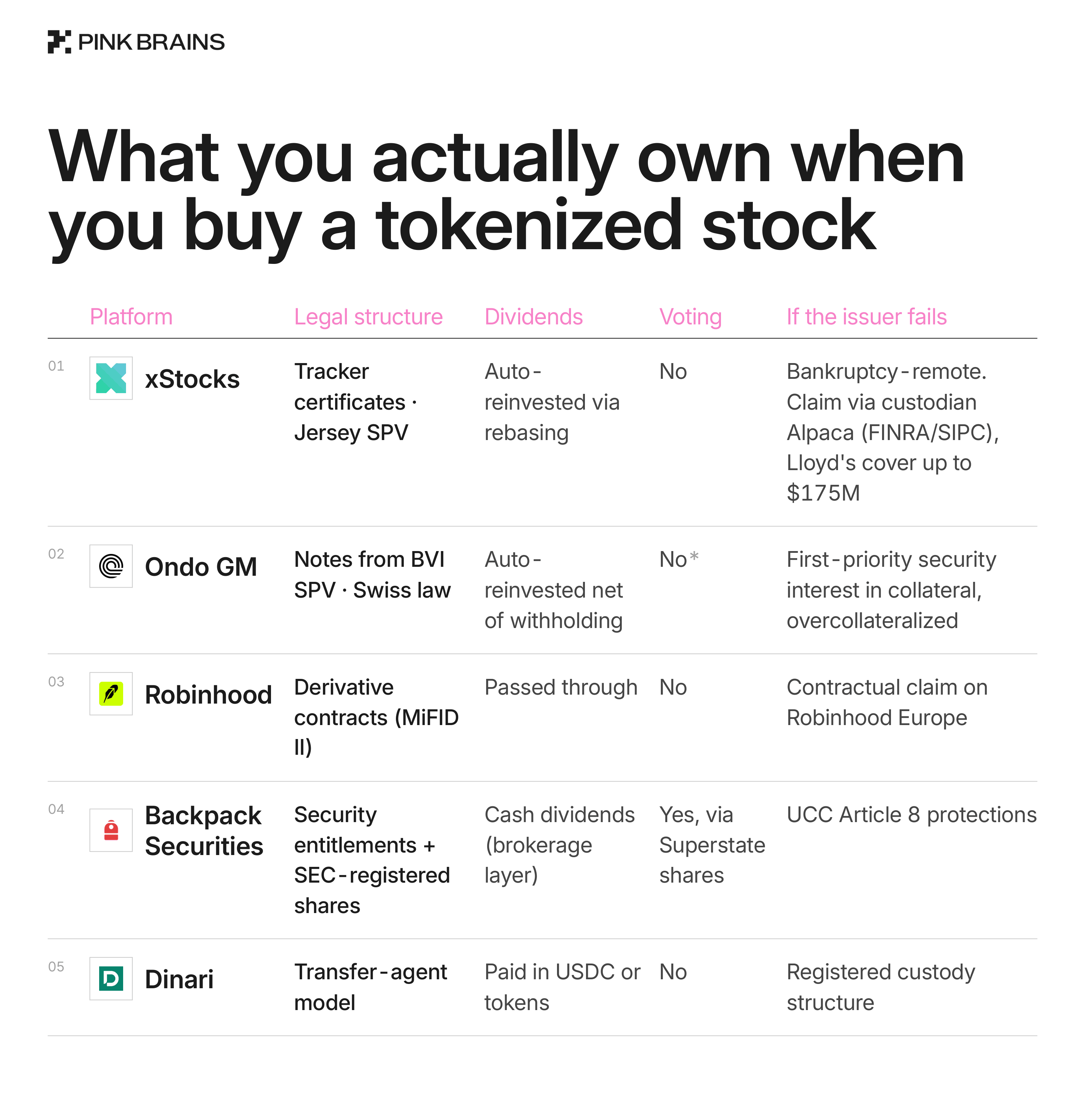
The asterisk matters. On July 2, 2026, Ondo launched the first US custodial tokenized securities with Broadridge - starting with BlackRock's IVV ETF and Micron - where voting and disclosures stay aligned with the real share through ProxyVote. It's the first genuine crack in the "tokenized means no voting" rule, though US retail access hasn't opened yet.
The bigger point: "tokenized stock" is one phrase covering everything from a derivative in a nicer outfit to an actual share with a blockchain address. Price exposure is table stakes now. The right bundle is the product, and it's the first thing to check before you buy, not the last.
How to Buy Tokenized Stocks and ETFs
There are two routes.
- Permissioned: sign up on a KYC'd platform like Kraken, Robinhood, or Backpack, fund with fiat or stablecoins, and buy in-app.
- Permissionless: use a self-custody wallet to swap USDC for xStocks or Ondo tokens on a DEX like Jupiter, Uniswap, PancakeSwap or Arcus (previously dYdX). No KYC needed for secondary trading.
Route 1: Permissioned exchanges
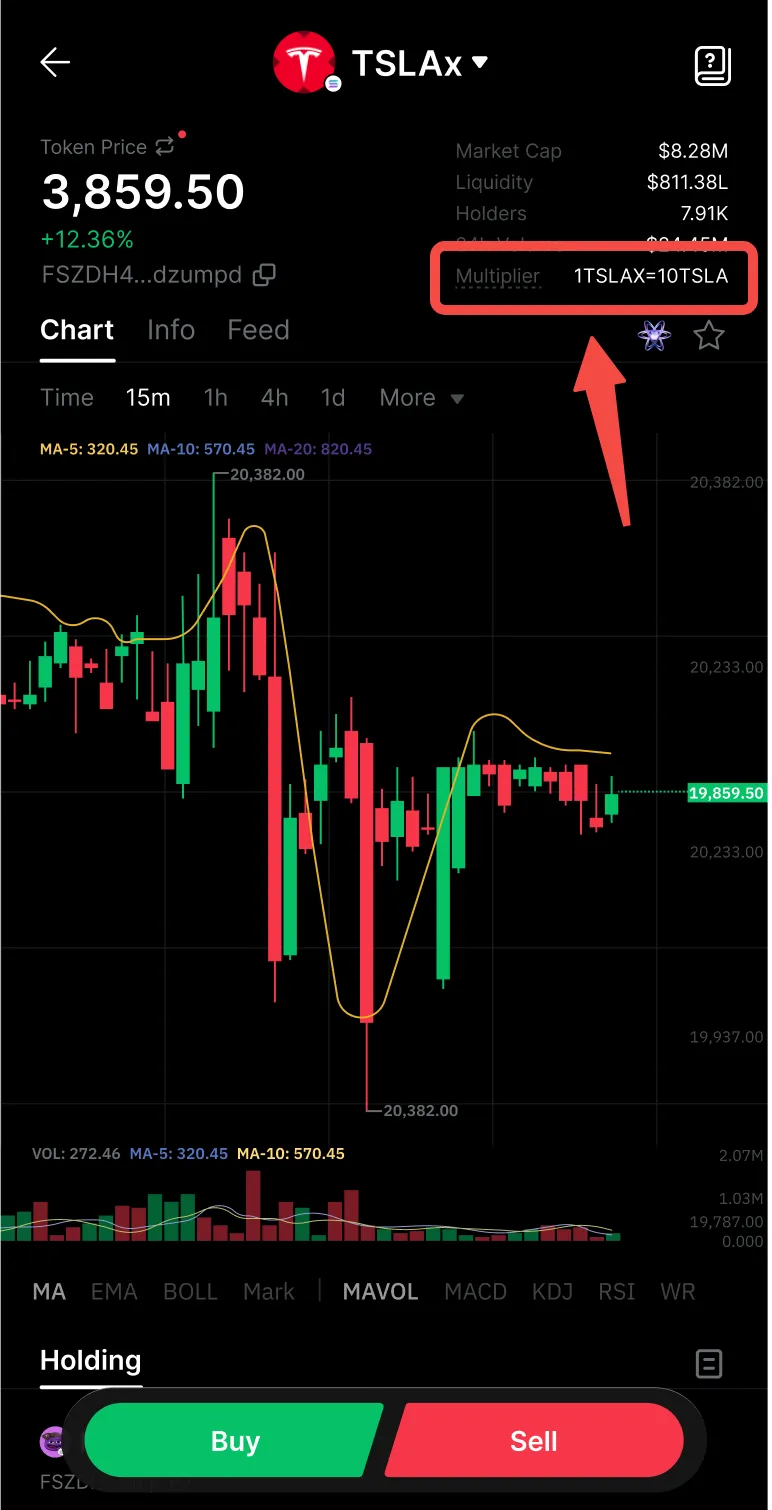
- Pick a platform that matches your region: Kraken, Binance, OKX, Bybit for most non-US users, Robinhood for the familiar app experience for EU, and US users, Backpack if you want real ownership (check its exclusion list first).
- Complete KYC. On Backpack, your existing crypto verification covers stocks, no separate check.
- Fund with fiat or stablecoins.
- Buy the token. Start small ($25–50 in a blue chip) and watch how the spread behaves outside the US market hours before you size up. Spreads widen when the underlying market is closed, and prices can gap at Monday open.
- Optional: withdraw supported tokens (xStocks, Ondo) to your own wallet. That's the bridge to route two.
Route 2: Permissionless exchanegs, self-custody
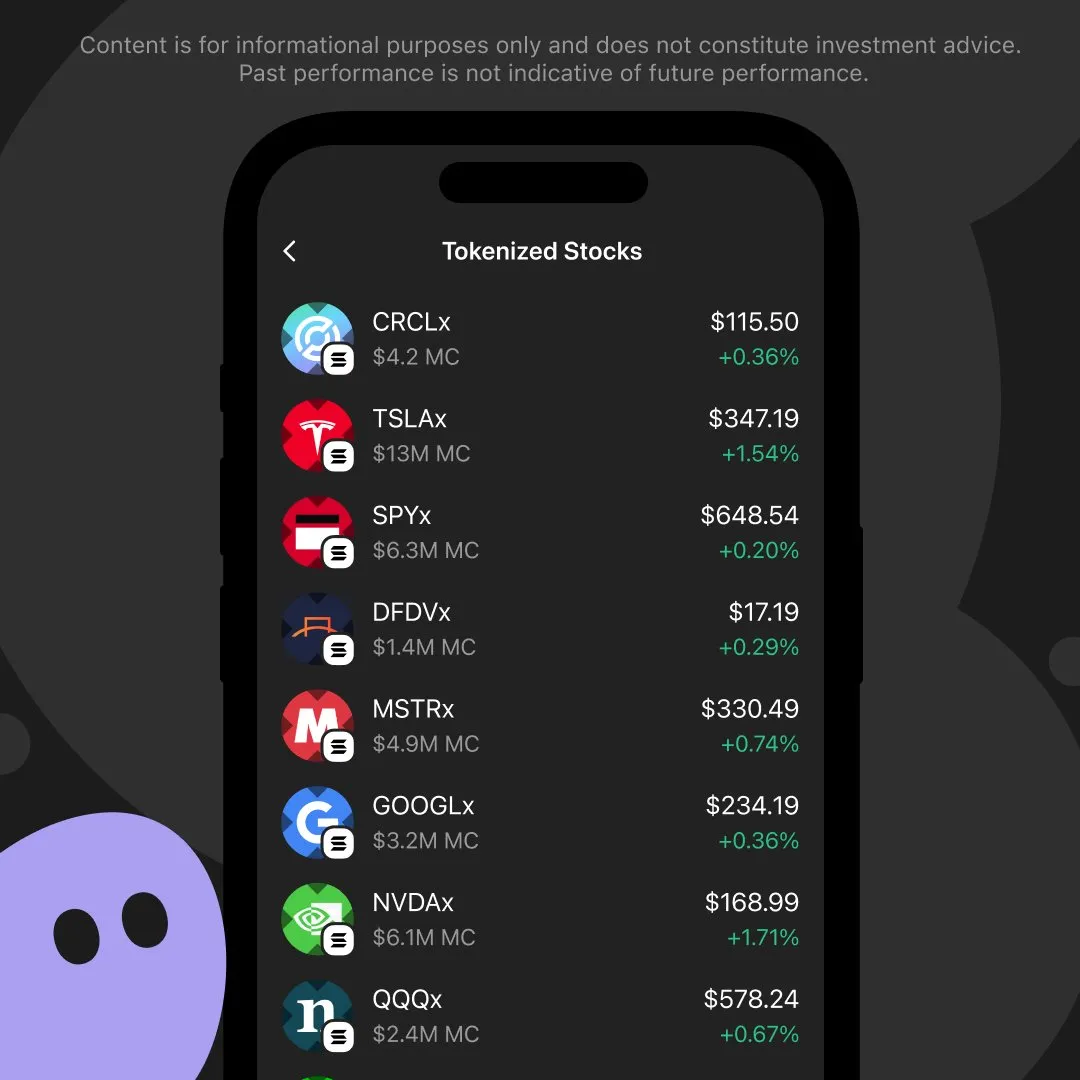
- Set up a Solana or EVM crypto wallet: Rabby, Phantom, MetaMask, or Backpack's own.
- Fund it with stablecoins like USDC, USDT or PYUSD
- Swap directly: Phantom or Jupiter for xStocks and Ondo tokens on Solana, MetaMask Swaps for Ondo on Ethereum, Arcus for Robinhood's stock tokens. No account, no sign-up.
- From there, the tokens are DeFi legos. Try lending or using tokenized stocks as collateral on Jupiter Lend, Kamino, or Morpho to borrow more stablecoins, and looping or providing liquidity on DEXs like Uniswap, Raydium and Orca.
Keep in mind that "permissionless" only applies to the secondary market. Minting and redeeming with the issuer always requires KYC, as the primary market is permissioned everywhere.
Geo-restrictions don't evaporate on a DEX: trading xStocks from a US IP breaches the issuer's terms even if the smart contract happily lets you. Permissionless rails, permissioned product.
The Risks Worth Caring About
No matter where you buy tokenized stocks, they are still crypto and "crypto is volatile."
- Issuer risk. Your token is only as good as the entity holding the shares. Check proof of reserves, check who the custodian is, check what happens in a bankruptcy. The good issuers publish all of this; treat silence as an answer.
- Liquidity. The entire spot market is about $1 billion. Tokenized Tesla's market cap is around $70 million, against Tesla itself. Thin books mean real slippage, and off-hours prices are a market maker's best guess, not an exchange print.
- The rights gap. Most of these products give you economics without ownership. That's fine if you know it, and a nasty surprise if you assumed your token votes, receives cash dividends, or survives a corporate action cleanly. Read the table above twice.
Final Take
Tokenized stocks are one of the most industry-changing crypto products in this decade. $1 billion sits in spot tokens while perps clear half a trillion a quarter. Exposure beat ownership for now. But the frontier moved fast in 2026: Backpack put SEC-registered shares onchain, Ondo got tokenized securities voting through Broadridge, and Robinhood made stock tokens a global, DEX-native product within a single month.
Ondo Global Markets is the largest tokenized stock platform in 2026, with 430+ products and roughly 70% market share. Kraken's xStocks lead on exchange access and DeFi reach, Robinhood now offers Stock Tokens globally via Robinhood Chain and the new Arcus DEX, and Backpack Securities is the standout for real share ownership and pre-IPO access.
Choose the platforms that work in your region and your risk appetite, verify the backing, start small. The 3am Tesla trade is fun. Access to S&P500 is unreal in developing countries. Knowing exactly what you bought is better.
FAQ
Are tokenized stocks legal in the US? Yes. Tokenized stocks are legal in the U.S. if they comply with U.S. securities laws. A tokenized stock is still considered a security, so issuers and trading platforms must follow SEC rules on registration, custody, broker-dealer licensing, and investor protection. Tokenization itself isn't illegal, it's the regulatory compliance that matters.
Where to buy tokenized stocks for EU users? For EU users, the main regulated options today are:
- Robinhood EU – Offers tokenized U.S. stocks and ETFs to eligible EU users through its app.
- Kraken xStocks – Provides tokenized U.S. stocks and ETFs (xStocks) for eligible users in supported European countries.
- xStocks – The underlying tokenization infrastructure powering listings on exchanges such as Kraken.
Availability depends on your country, as regulations vary across Europe.
Do tokenized stocks pay dividends? Yes, but rarely as cash. xStocks and Ondo auto-reinvest dividends so your balance grows; Robinhood and Dinari pass the value through; Backpack's brokerage layer pays actual cash dividends. Perps never pay dividends.
Do tokenized stocks give you voting rights? Almost never. xStocks, Ondo GM, Robinhood, and Dinari all say no in their legal docs. The exceptions are Backpack's Superstate-issued shares and Ondo's new Broadridge-integrated US product, where voting follows the real share.
What's the difference between tokenized stocks and stock perps? A tokenized stock is a backed claim: a real share sits somewhere behind it. A perp is pure oracle-priced exposure with no share at all, kept in line by funding rates. One is a wrapper; the other is a price bet.

.png)

%201%201.png)