DeFi KOL Marketing 2026: How to Promote?
10 mins


Most crypto marketing guides approach influencer campaigns from the project’s perspective: pick KOLs, allocate budget, launch campaigns, and track impressions. But after working with 35+ leading DeFi projects on influencer marketing over the past three years, we’ve found the best campaigns are built from the user’s perspective: how they discover, trust, and engage with the product.
So we reversed the usual approach. Instead of starting with tactics, we start with behavior: how DeFi users discover protocols, what convinces them to try one, and what keeps them around.
This article explores those questions through examples from some of the top DeFi projects in the space.
How do DeFi users discover new protocols?
Crypto users typically discover opportunities on X (Twitter), then verify the details on DefiLlama, DeBank, Artemis, Token Terminal, and the protocol's own documentation before depositing. Discovery is social; the decision to deposit is data-driven.
In practice, the path looks like this. A trusted account posts about a new perpetuals DEX. The post rarely triggers an immediate deposit. Instead, a user checks on the project’s official accounts, scans through some posts and reviews from other KOLs, learns about the growth of volume, TVL, incentivized programs via KOLs, then skims the docs and guide before depositing over a small test amount. The post introduced the protocol; the thought-leadership content and data is what closed the decision.
This is why X remains the center of gravity for DeFi. It's where narratives form, where exploits get flagged in real time, and where founders and researchers argue in the replies. The Block's 2026 DeFi Outlook notes that sophisticated capital tends to track onchain signals and X discussion together, rather than following raw influencer reach.
The practical implication for a protocol team: the goal in discovery isn't to go viral. It's to be mentioned by accounts that data-driven users already trust, and to make sure that when those users run their checks, the numbers hold up. A strong X mention paired with a thin TVL or a weak audit page won't convert the users who matter.

What are DeFi users looking for right now?
In 2026, DeFi users are drawn to a handful of clear themes: new DeFi trends (tokenization, perpetuals, RWA and pre-IPO perps, and the crypto-AI wave), airdrops that now demand real contribution, yield backed by genuine revenue, tokens with value-capture tied to product usage, and a new set of trading venues. The common thread is verifiable mechanics rather than marketing language.
New narratives: perps, RWA perps, and crypto-AI
the best narratives are the ones that mutate into even bigger narratives. best recent example is perps: 1. starts with leverage on crypto assets 2. then 24/7 tradfi 3. then pre-IPO trading. best narratives expand their own market / narrative. Source: nairolf
Perpetuals remain the centre of gravity. The Block reported the DEX-to-CEX perpetual futures volume ratio roughly tripled over 2025, from about 6.3% to 18.7%, and Hyperliquid sits at the centre of it.
What's newer is what people are trading. Hyperliquid's HIP-3 upgrade (October 2025) opened permissionless perp listings, and DWF Labs reports over 100 RWA markets launched as a result - equities, commodities, indices, FX, even pre-IPO names - driving more than $130B in cumulative volume, with RWA markets making up over 90% of HIP-3 open interest by late March 2026.
Ostium, a dedicated RWA perp DEX on Arbitrum, Trade.xyz, and Ventuals on Hyperliquid, have built a strong niche in commodities and FX; CoinDesk noted that pre-IPO perps of Cerebras on Trade.xyz "priced the stock almost perfectly in hours ahead of its opening trades on the Nasdaq”. The thesis Ostium calls "perpification" - that a perp only needs a price feed and a liquidity pool, not a full tokenization stack - is pulling traditional-market exposure onchain faster than tokenized spot.
The other major narrative is crypto-AI and robotics. The interest centers on agentic payments and AI-aligned token incentives rather than logos.
- Bittensor (TAO) went through its first halving in late 2025 and now runs 120+ active subnets with revenue-generating demand.
- Virtuals Protocol (VIRTUAL) reported $400M+ in agentic GDP and $60M+ in protocol revenue in Q1 2026 across 17K+ deployed agents, and co-authored an Ethereum Foundation standard for cross-chain agent commerce.
NEAR and Venice anchor the private-inference and data-sovereignty side. Underneath it all, agentic payment standards like x402 (HTTP-402 micropayments) crossed a million transactions in two weeks as endpoints went live, and early crypto x robotics tie-ins like XMAQUINA, Robotics Capital Markets, are starting to appear. The category is volatile and full of low-quality tokens, but the part users actually care about is the revenue and usage now attached to the leaders.
Airdrops, but the bar has risen
Airdrops still drive a lot of behaviour. Most farmers are looking for the next HYPE-scale event. But the easy era is over.
Programs increasingly reward genuine contribution: organic human trading, real liquidity provision, and community work like educational content, moderation, and support. Sybil filtering has become standard.
The clearest signal is in design: points programs that weight fees generated over capital parked, and testnet rewards that look at sustained, qualitative participation rather than raw transaction counts. (More on how this is reshaping airdrop design in the section below.)
Real yield
Users now separate yield funded by genuine revenue from yield printed through emissions, and they favour the former. Real yield shows up in three main forms: trading-fee revenue, RWA-backed yield, and yield-bearing stablecoins.
Yield trading platforms like Pendle, alongside vaults managed by risk curators like Veda, Gauntlet, MEV Capital, and Steakhouse, have become the primary gateway for capital deployment, routing more liquidity into vaults and fixed-yield strategies built on top of underlying yield sources.
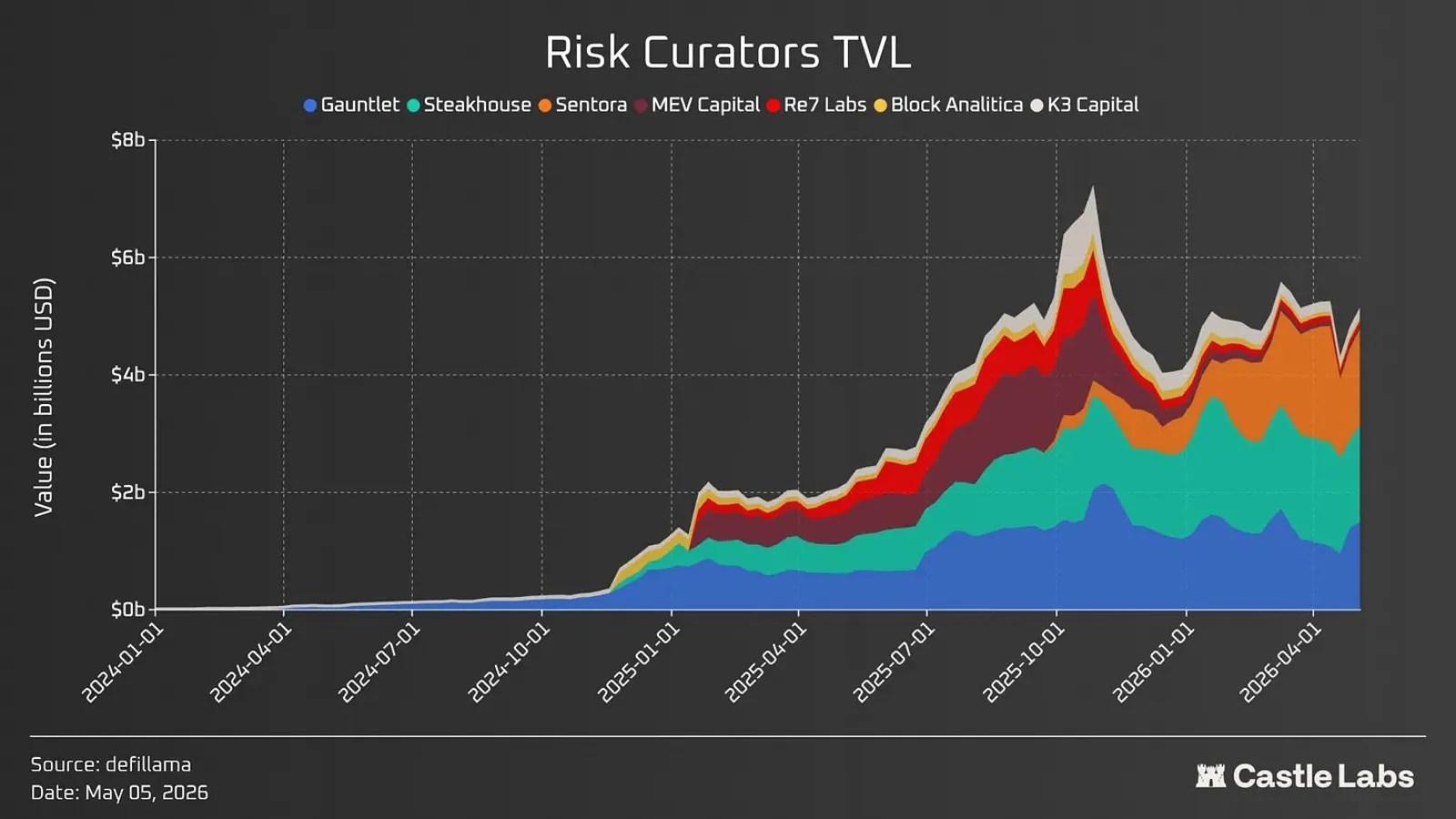
Ethena's sUSDe, for instance, derives yield from a delta-neutral basis trade and reached roughly $5.8B in supply; Sky's sUSDS pay around 4-4.5% funded by RWA collateral and stability fees, which also notes S&P gave Sky the first credit rating ever issued to a DeFi protocol.
CoinGecko frames the broader shift as moving from a market that produces yield through emissions to one that imports and distributes yield from real sources.
Value-capture tokenomics
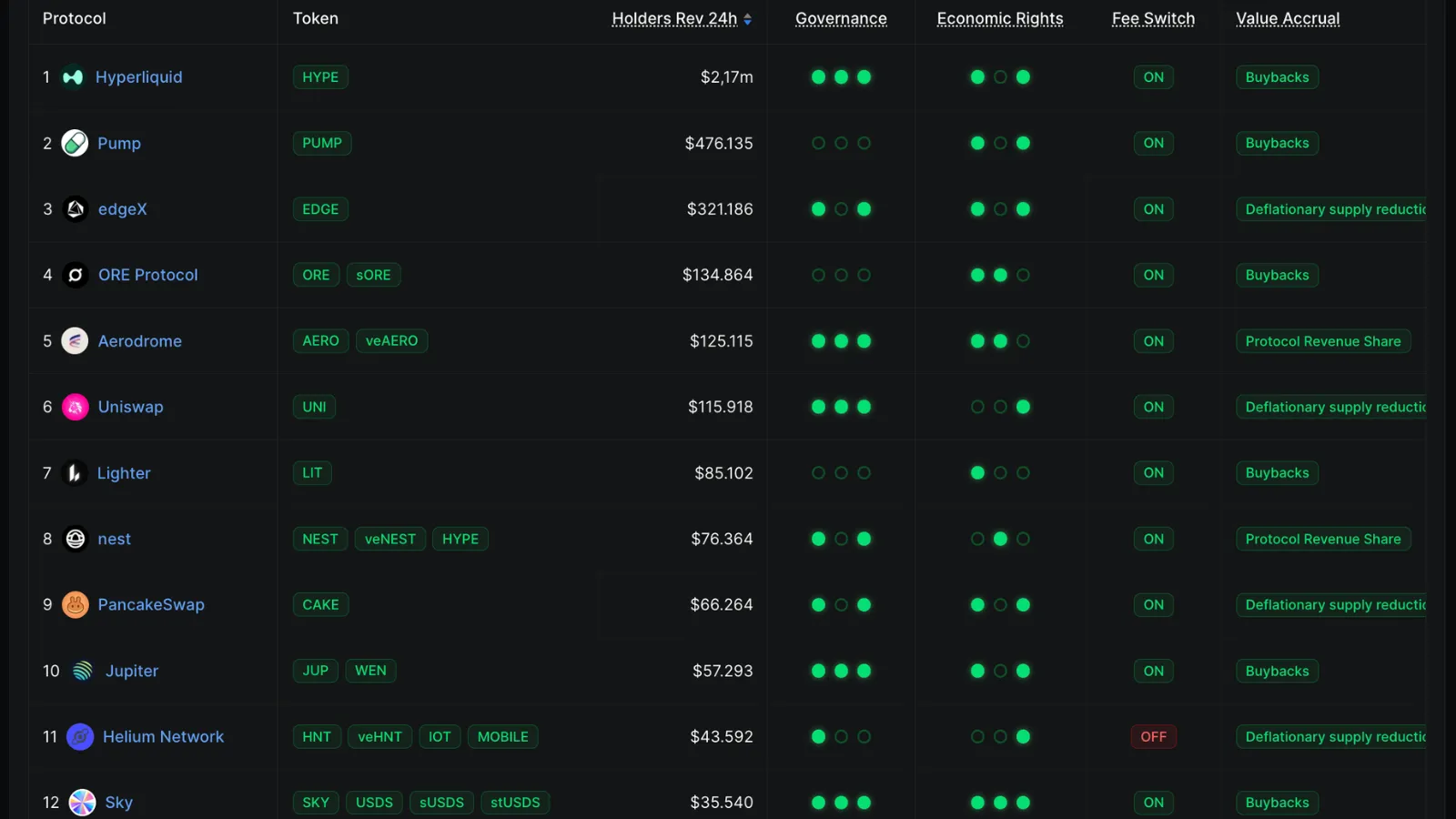
Beyond yield, users are increasingly drawn to tokens whose value is tied to product adoption - often through buybacks, buybacks and burns, deflationary supply reduction, and protocol revenue share.
Hyperliquid’s HYPE is the reference case: Hyperliquid's Assistance Fund directs roughly 99% of trading-fee revenue into open-market buybacks, with cumulative buybacks past $1.16B. Since TGE, 4.45% of the total supply of HYPE has been bought back and burned.
Venice's VVV ties demand to staking for AI inference capacity and part of protocol revenue is used to buy back and burn VVV, with ~40% of the supply already burned. VVV’s price has increased by 400% year-to-date.
Bittensor'sTAO follows a Bitcoin-style halving to shift from inflationary growth to scarcity. The pattern users look for is the same: a token wired to something the product actually does, where activity translates into value rather than dilution.
New trading venues
Finally, attention is spreading to newer venue types: prediction markets (Polymarket and Kalshi reached substantial combined volume through 2025), card-trading and collectibles marketplaces, and crypto casinos. These sit at the more speculative end, but they're pulling real volume and represent where some user attention and liquidity are rotating next.
Logan Paul revealed he has no stocks in his investment strategy, only Pokémon cards. The Pokémon trading card market is worth $75 billion in 2026. In 2016, it was less than $15 billion. Collector Crypt, a card trading marketplace, has surged to become Solana’s 2nd highest revenue-generating dapp with $1.9 million in daily revenue.
What every one of these shares is a reason to be interested that a user can independently confirm. The interest comes from the mechanics, not the messaging.
What makes DeFi users return to a protocol?
DeFi users return to a protocol when it earns a place in their routine - usually because it solves a real-life need, its token captures genuine value, its yield comes from actual revenue, and its incentives reward real usage rather than farming. Reliability through volatility matters too; the protocols people come back to are the ones that didn't break, didn't change terms quietly, and didn't depend entirely on emissions to hold deposits.
This is one of the few areas in marketing where the proof is measurable onchain. The relevant metric is Net Liquidity Retention (NLR): the share of capital that stays once the high-emission or "honeymoon" period ends.
A protocol that holds or grows NLR as rewards decline shows real product-market fit; one that loses capital the moment emissions drop was mostly hosting what the industry calls "mercenary capital."
The April 2026 KelpDAO exploit showed how quickly DeFi capital exits when trust breaks. Even though Aave’s contracts weren’t hacked, attackers used stolen rsETH as collateral there, leaving ~$196M in bad debt. Aave’s TVL dropped from $26.4B to $14.6B within a month, while weekly active users fell by more than half. In contrast, Morpho grew by focusing on sticky institutional integrations instead of subsidy-driven yields, expanding deposits from $5B to $13B in 2025 and users from 67k to 1.4M+.
The difference is clear: protocols that retain capital usually earn it through trust, distribution, and reliability, not temporary APYs or TVLs.
Real-world use cases
The clearest reason to return is that a protocol does something useful in everyday life. Crypto payments, crypto cards, neobanks, and onchain vaults give users a reason to come back that has nothing to do with speculation.
A good current example is the ether.fi Cash. It pays cashback from DeFi yield rather than a marketing budget: a user's ETH keeps earning staking and restaking rewards (roughly 3–5% base APY) while the same collateral funds card rewards, with idle stablecoins in the vault earning around 5%. The card runs a promotional 3% cashback across tiers in early 2026, paid in wETH, and ether.fi reports it has distributed around $5M in membership rewards, according to a detailed card review.
The point isn't the exact rate; it's that everyday spending becomes a recurring reason to keep funds in the protocol. The same logic explains why crypto neobanks (KAST, for instance) and capital-allocator products keep users: they're woven into normal financial behaviour, not just a yield screen people visit once.
Tokenomics that reflect a real product
Users return more readily when a token captures the value the product actually generates, rather than relying on narrative.
The reference case in 2026 is Hyperliquid's HYPE. Its Assistance Fund directs roughly 99% of trading-fee revenue into open-market buybacks. Hypeliquid’s holder revenue is now above $65M in a recent month, and cumulative buybacks have passed $1.16B. Bitwise's CIO summarised the appeal plainly: the token is designed so that rising platform activity directly benefits holders. That's a value loop a user can verify, which is why it sustains attention rather than just a launch spike.
Venice's VVV is a different but equally concrete model: staking VVV grants a pro-rata share of the platform's daily AI inference capacity, and locking it mints DIEM, a token representing $1/day of API credit. Venice has burned over 42% of genesis supply and cut emissions 25% in February 2026 - demand tied to actual usage of private inference, not speculation.
The pattern across both: when the token is wired to product usage, holding, and returning make sense on their own terms.
Airdrops and incentives, but not vaporware
Airdrops still bring users back, but the easy-farming era is largely over. Programs increasingly reward genuine usage and filter out Sybil behaviour - and two recent approaches show the range of what teams are trying.
Monad skipped a points program entirely. Instead, it ran a testnet and rewarded real community members based on their contributions. Its October 2025 airdrop used five contributor tracks with heavy anti-Sybil work, and recognised around 5,500 wallets in the community track for creative initiatives, support, and organic growth. The reaction was mixed, as these always are, but the design intent was clear: reward contribution and social proof, not transaction-count farming.
Points-based programs, meanwhile, are proving genuinely hard to get right. MegaETH's "Terminal" program is the cautionary example. Launched alongside its TGE in late April 2026 as an 8-week season, it was terminated early on May 21 - only about three weeks in - with remaining functions folded into Rabbithole.
Big oof for @megaeth.The obvious read is that Terminal had too much farming and not enough real usage among the 5 people who use it. Source: DeFi Warhol
Even a thoughtfully designed program (non-transferable points, a weekly pick-3 cap to push focused usage) struggled to produce the retention it was meant to. The lesson teams are drawing: points can generate activity, but turning that activity into users who stay is a separate and much harder problem.
For protocols with proven product-market fit or wanting to avoid post-airdrop sell pressure, a token airdrop may not even be the right tactic. Some are turning to cashback or recurring "cashdrop"-style rewards instead - ether.fi's card cashback and referral campaign on dining being the obvious case, and Project X on Hyperliquid weighting points by fees generated rather than capital parked, with wash trading and self-referrals subject to slashing.
These rewards continue to be used rather than a one-time claim, which aligns better with retention than a single airdrop that farmers exit the moment it lands. For marketing, the takeaway is that content can't be the thing that brings users back; the product, the token design, and the incentives have to be. What content can do is document them credibly. Those points work because they're checkable.
How do DeFi projects retain users?
DeFi retention rests on four things working together: a product experience good enough to use daily, responsive customer support, tokenomics that keep the community aligned, and community building that extends well beyond a Discord server. Incentives get users in the door; these are what keep them.
Cohesive product and user experience
The first retention lever is whether the product is actually pleasant to use. The bar has risen: users expect crypto to be abstracted away, mobile-friendly, and backed by infrastructure that doesn't fail under load.
Hyperliquid's rise is partly a UX story - execution fast and reliable enough that traders treat it like a centralised venue, which is a large part of why DEX perpetuals volume climbed to roughly 18.7% of CEX volume over 2025.
The ether.fi card works for the same reason: it slots into Apple Pay and Google Pay and behaves like a normal card while the DeFi machinery runs underneath. When the experience is smooth, returning is the path of least resistance.
Responsive customer support
This is the lever most DeFi teams underrate. The era of users who'll happily debug a failed transaction themselves is largely over, and as products reach less technical users, support quality becomes a real retention factor.
Fast, genuine support, and visibly acting on user feedback, is what builds loyalty, particularly because early-stage "communities" are often dominated by airdrop farmers rather than committed users. Treating support as a core function rather than an afterthought is one of the clearer ways to separate users who stay from users who were only ever there for the incentive.
LayerZero learned this the hard way. Its slow response to KelpDAO’s incident last month appears to have pushed several key clients - including Lombard, KelpDAO, Turtle, and others - to move away from LayerZero in favor of Chainlink’s cross-chain messaging infrastructure.
Well-structured tokenomics
Token design continues to shape community sentiment, and it's a retention tool as much as a fundraising one.
The HYPE buyback model and Curve's original veCRV lock mechanism are both examples of designs that give holders a reason to stay aligned rather than rotate out. A useful overview of retention strategies that don't rely on bribes covers the supporting mechanics - protocol-owned liquidity, concentrated liquidity, dynamic fees, better LP UX - all aimed at making capital stay without a recurring incentive auction. As that piece notes, bribes attract liquidity that optimises spreadsheets; they're a pricing mechanism, not a moat.
Strategic community building, including DeFi KOLs
Community is much larger than a Discord server, and treating it as just that is a common mistake. In practice it's a combination of closed channels (Discord and Telegram run by admins, with online events), local ambassadors and BD handling in-person meetups and conferences, and both team and founder marketing. Each layer raises the cost of leaving: a user who's in the group chats, has met the team at an event, and holds governance tokens is less likely to move for a marginally better yield elsewhere.
The piece most projects miss is building relationships with DeFi KOLs as part of community building - not as paid promotion, but as credible outside voices.
Established DeFi KOLs have hard-won reputations, so their feedback, endorsements, and reviews carry an objective weight a brand account can't manufacture. The 2025 State of Digital Finance Report found that 64% of US crypto users got into DeFi through educational content from credible KOLs - these voices shape how a product is understood, not just whether it's seen. Once those relationships exist, they also open the door to retention-oriented campaigns: affiliate and referral programs, team trading competitions, and ongoing educational content that keeps existing users engaged rather than chasing new ones.
The honest limit on all four: marketing and community work can't repair a weak retention model. If a yield is funded entirely by emissions and the only moat is incentives, no amount of support or community effort will prevent the drop in TVL when rewards end. Retention is built in product and tokenomics first, then sustained by support and community.
What Type of DeFi KOL Fits Best?
DeFi KOLs broadly fall into four functional types: researchers, educators, hands-on farmers, and vertical specialists. Each is suited to a different part of the user journey. Treating them as interchangeable reach is a common and expensive mistake, because they don't do the same job.
This is roughly how we think about it at Pink Brains, building on our own list of 99 DeFi influencers worth following:
- Researchers build thesis credibility. They write the longer, primary-source threads that get a new mechanism taken seriously. Useful for awareness and for positioning a genuinely new design. Examples include creators like Stacy Muur, DeFi Cheetah, and Ignas, who's known for detailed threads on yield strategies and protocol design with balanced risk assessments.
- Educators help with onboarding. They translate complex products into something a user can act on - useful for protocols that need explaining before anyone deposits. Examples include Eli5DeFi and The DeFi Investor.
- Hands-on farmers drive onchain activity. They post real positions, profit and loss, and step-by-step accounts of what they did. Most relevant when the goal is deposits.
- Vertical specialists carry authority in a narrow area - crypto x AI, onchain analysts, prediction markets signals, traders, or even crypto savvies who work as engineers, analysts, or marketers in crypto companies - where a generalist has little credibility.
What DeFi KOL content performs best?
The DeFi content that tends to perform best is specific and verifiable: on-chain receipts, step-by-step strategy threads, balanced protocol breakdowns, and timely analysis of exploits or new mechanisms. Content that underperforms is usually generic, undisclosed, or unverifiable.
What works, and why:
- Evidence over claims. A thread showing an actual position - size, entry, profit and loss, transaction hashes, wins and failure - generally lands better than a "next 100x" prediction. DeFi users are used to discounting claims and weighing verifiable evidence.
- Strategy walk-throughs. A clear account of how someone farmed an airdrop, including gas costs and risks, gets saved and shared because it's directly useful.
- Balanced breakdowns. Threads that explain the mechanism and name the risks read as more credible than one-sided promotion. Pairing upside with the friction and what to watch is a reliable way to earn trust with an informed reader.
- Timely analysis. Being early and accurate on an exploit, a depeg, or a new design is one of the fastest ways to build standing on X.
Common mistakes in DeFi KOL marketing
The recurring mistakes are fairly consistent:
- Using creators who do not understand the product. Sophisticated DeFi products require explanation, not just exposure. When creators cannot clearly explain the mechanism, risk model, or value proposition, the campaign often feels forced and unconvincing.
- Generic content. Words like "revolutionary" and "game-changing" tend to signal a lack of anything checkable to say. Informed users filter them out quickly.
- Audience mismatch. Promoting a complex protocol to an audience oriented toward memecoins produces impressions without meaningful conversions - a quiet but common waste of budget.
- Over-centralizing narrative around a few large influencers. Depending entirely on top-tier KOLs creates concentration risk. Smaller domain-specific creators with loyal audiences often produce stronger engagement and trust.
- Fake reach. Bot-follower detection has improved. Professor Crypto, the winner of the Best Content Creator award at Token2049 Singapore, has deleted his X account after being accused of using bots to manipulate his social metrics.
- One-off posts over relationships. Some campaigns are structured around immediate token price attention rather than ecosystem growth. This often attracts speculative capital that disappears as quickly as it arrives.
- Ignoring product readiness. KOL campaigns can amplify attention, but they cannot compensate for poor onboarding, weak documentation, broken UX, or unclear positioning. Traffic without retention usually turns into expensive churn.
The bottom line
Working backward from how DeFi users behave changes the shape of a marketing plan. Discovery is about being mentioned by trusted accounts and making sure the data holds up when users check it. Interest comes from verifiable mechanics rather than messaging. And retention is built into tokenomics and product first, with content used to document reliability and keep the existing community engaged.
The pattern worth noting is that the protocols doing well treat content as evidence rather than advertising - letting researchers test the thesis, letting users share real results, and letting the TVL trend after incentives end speak for itself. For most teams, the first thing worth examining isn't the KOL budget; it's whether the product gives users a reason to come back once the rewards stop.
If that sounds like a fit for your DeFi project, explore our work at Pink Brains’ KOL Studio or reach the team at hello@pinkbrains.io

.png)

%201%201.png)